
Siby K. Joseph
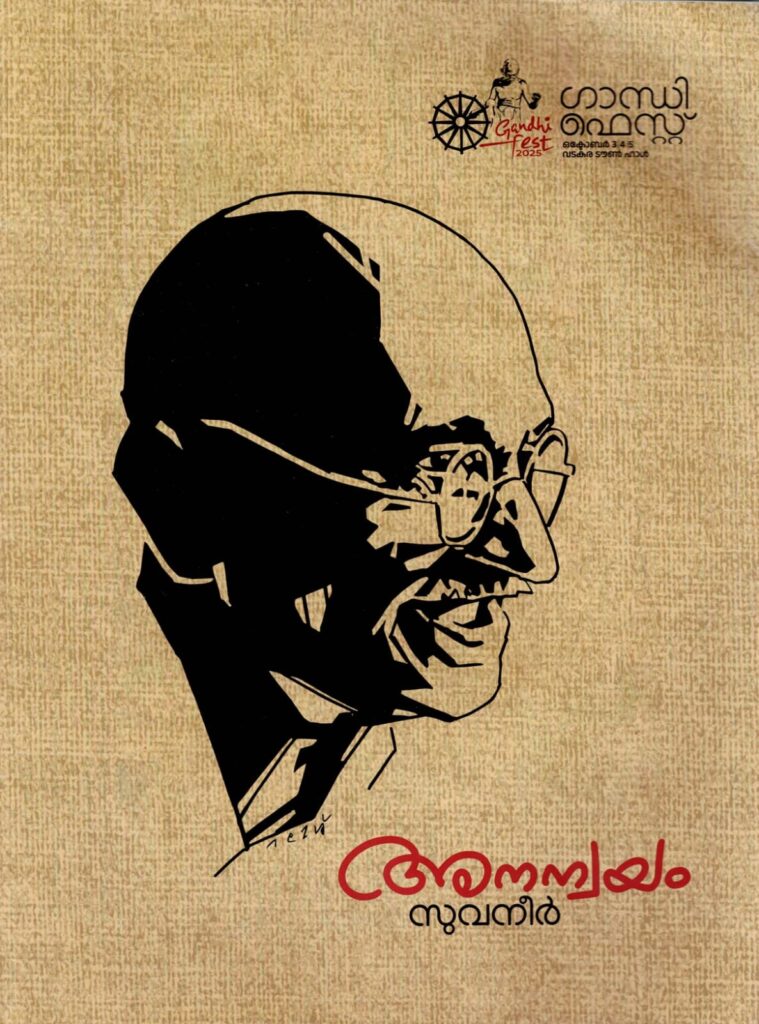
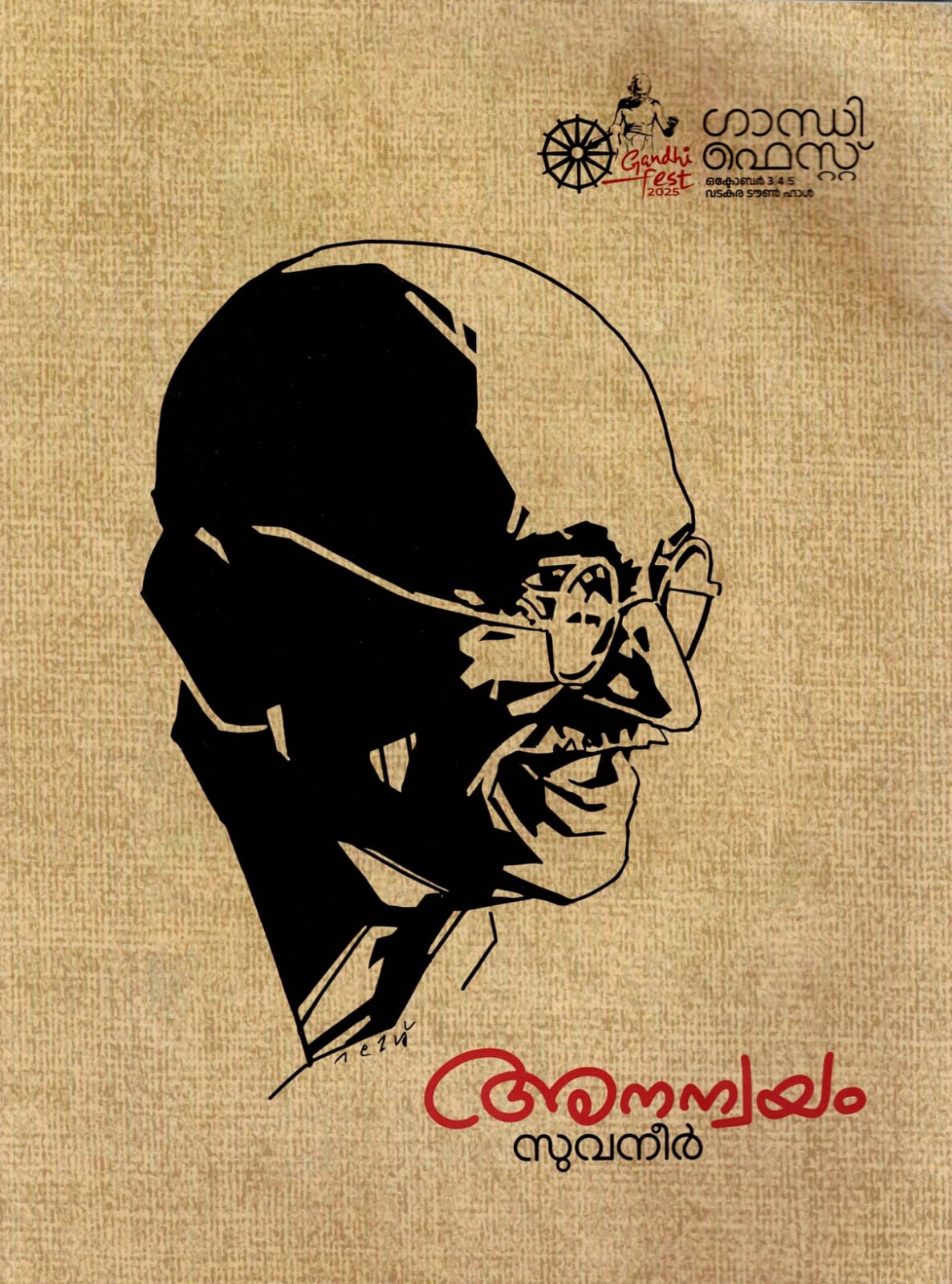
“Ananwayam” (അനന്വയം) is the official souvenir of the Gandhi Fest, a monumental three-day event held from October 3–5, 2025, in Vadakara, Kerala—a historic region uniquely blessed by the personal visit of Mahatma Gandhi during the freedom struggle. Published in May 2026, this prestigious volume was edited by P. Harindranath, a distinguished historian and acclaimed author of books on Gandhian thought and the Indian independence movement. Literally translating to “unparalleled,” “matchless,” or “incomparable,” the term Ananwayam describes a phenomenon so utterly unique that nothing else in the world can serve as its equal. Naming this festival souvenir Ananwayam is a deliberate, profoundly symbolic choice that signifies Mahatma Gandhi’s life, philosophy, and enduring legacy remain unmatched in human history. In essence, it captures the foundational truth of his existence: “Gandhi can only be compared to Gandhi himself.”
The volume’s editorial structure opens with an insightful Preface from the Editor, P. Harindranath, which sets the academic and philosophical tone for the compendium. This is accompanied by a foundational Introductory Article by Manayat Chandran, Chairman of the Gandhi Fest Organizing Committee, which outlines the overarching vision behind hosting this historic three-day event in Vadakara.
Serving as a landmark anthology, Ananwayam compiles rare, timeless historical writings and classic profiles from legendary global leaders, literary icons, and thinkers of the past. This historical archive includes intimate political and personal reflections on the mentor by India’s first Prime Minister, Pandit Jawaharlal Nehru, alongside an analysis of Gandhi as a prophet of new modernity by the legendary socialist thinker Dr. Ram Manohar Lohia. Global and artistic dimensions are brought to light through the Nobel Prize-winning American novelist Pearl S. Buck’s reflections on the martyrdom of the Mahatma, and acclaimed actor Sir Ben Kingsley’s thoughts on the deep creative process of capturing Gandhi’s spirit on screen. Furthermore, the volume contextualizes his legacy through regional and scientific lenses, featuring an exploration of Gandhi by the eminent scientist and essayist K. Bhaskaran Nair, and historical commentary on Gandhi championing social equality by Mahakavi Kumaran Asan, the pioneer poet of Kerala’s romantic renaissance. It also includes an analysis of Gandhi as a lonely pilgrim by the revered poet, academic, and activist Prof. G. Kumara Pillai, alongside a critical study by the celebrated ecologist Prof. Madhav Gadgil, who maps out the contemporary significance of Gandhi and Kumarappa.
Complementing these historical selections is a rich collection of contemporary scholarship, bringing forward critical modern essays from prominent modern writers, thinkers, and academics. This section features P. N. Gopikrishnan wrote profoundly on the dark tragedy of January 30, 1948, Prof. B. Rajeevan discussing the multi-layered resurrection of Gandhi, and Dr. K. Aravindakshan explores Gandhi’s unexpected role as a healing doctor. Theoretical frameworks are examined by Prof. K. P. Sankaran as he deconstructs the fundamentals of Gandhian ethics, Dr. M. P. Mathai who analyzes the critical intersection of Gandhi and the environment, and Prof. Nataraj Huliyar who re-examines Gandhi through the lens of Ram Manohar Lohia.
Social justice, structural politics, and historical turning points form another core pillar of modern perspectives. This includes vital comparative studies on Gandhi and Ambedkar provided independently by Dr. Sunil P. Ilayidom and Dr. P. M. Girish. Dr. Teresa Joseph investigates the complex political relationship between the state and the individual, while Dr. Siby K. Joseph reflects on the Quit India Movement and Gandhi’s enduring blueprint for an inclusive India. Broad humanistic and structural applications are further expanded by Dr. M. S. John, who details a comprehensive Gandhian approach to human rights, and K. Sahadevan, who offers an insightful exploration of Gandhi and morality. The contemporary section concludes with specialized institutional and thematic focus areas, featuring Prof. M. N. Karassery’s examination of Gandhi and the railways, editor P. Harindranath’s deep dive into the revolutionary text of Hind Swaraj, S. Gopalakrishnan’s unusual and enlightening look at Gandhi and sports, and Adv. E. V. Lijish’s detailed analysis of the overarching impact of Gandhi on the Indian Constitution.
Beyond its rich collection of historical and contemporary essays, the volume also features an evocative selection of tribute poems and creative articles that capture the philosophical and artistic essence of the celebration. To bring the three-day event to life for readers, the compendium concludes with a vibrant visual section, offering a comprehensive glimpse of the festival through a curated gallery of photographs shot on the occasion. This blend of critical scholarship, literary artistry, and documentary photography ensures that Ananwayam stands as a holistic archive of the historic gathering in Vadakara.
This Post Has 5 Comments
The creme of d writings is show cased brilliantly.. Whoever has done this briefing needs an applause…. It has evidently proved as a critical study through d analysis and categorisation of d valuable writings in different genre
May I get a copy of the souvenir
Pls send a copy of the souvenir. I am ready to pay the price
The explanation behind the title “Ananwayam” was especially meaningful, because it connects Gandhi’s legacy to something truly beyond comparison rather than treating it as just another historical tribute. I also appreciated the way the article highlights Vadakara’s connection to Gandhi’s visit, which adds an important regional and historical dimension that many readers may not be aware of.
In the current World order, the efforts taking by Mr. P. Harindranath to promote Gandhian thoughts is inconsequential. His recent book about Gandhiji and his mind blowing speeches are widely accepted by the society.