Prof. Michael W. Sonnleitner
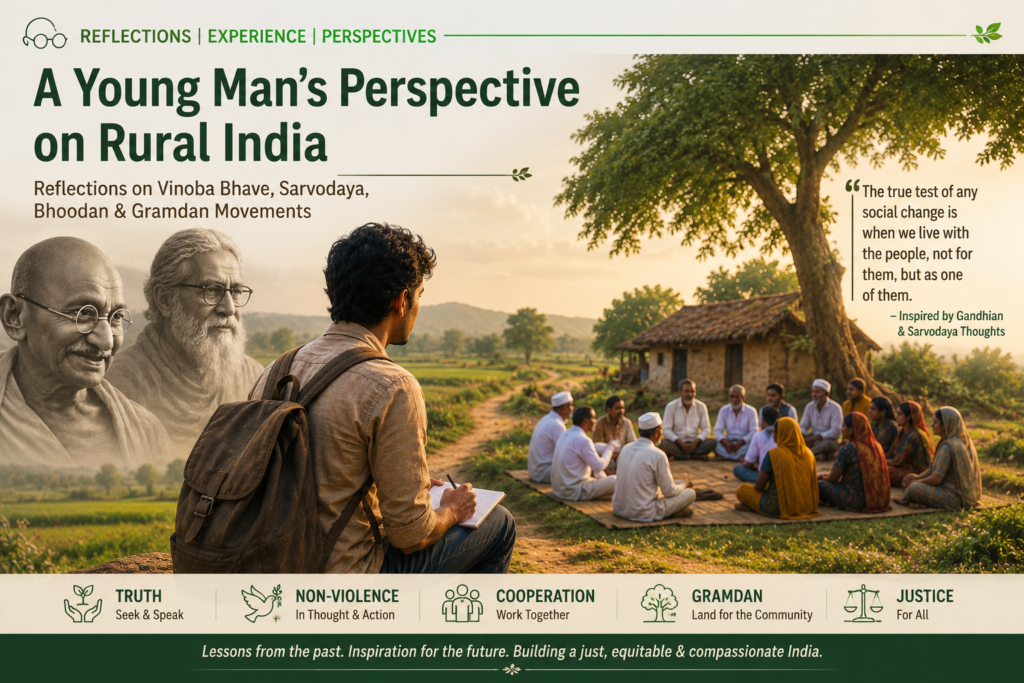
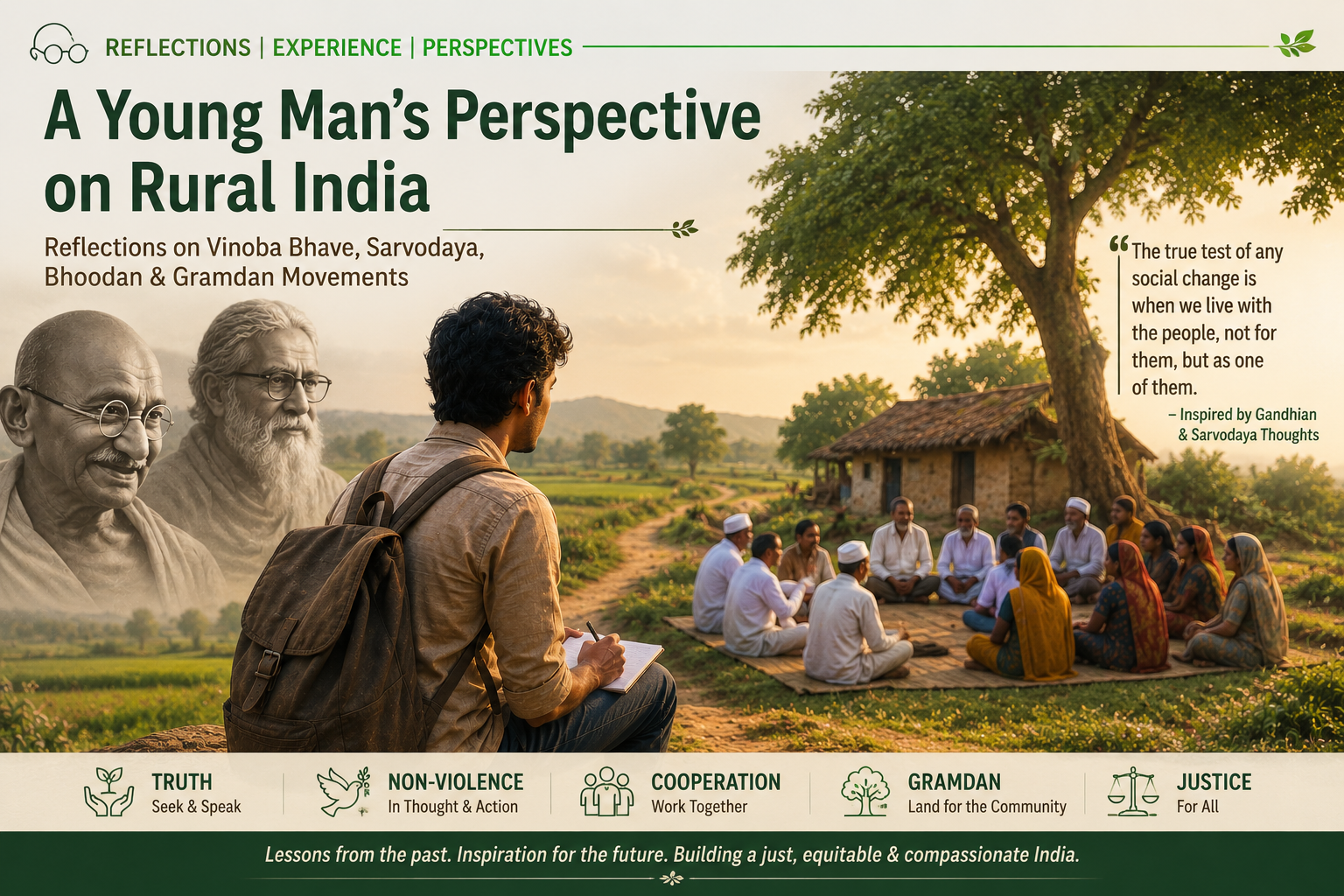
A Young Man’s Perspective on Rural India
First, let us be very honest: I am no expert on Vinoba Bhave, Sarvodaya, or the Bhoodan movement. I have some experience simply because as a young man of 22—just 20 years after Vinoba began the Bhoodan movement—I was a bit like Marco Polo. I was in India.
I travelled for six months meeting people who had known Gandhi. That journey included visiting four different ashrams in rural areas and spending a good deal of time living with Sarvodaya workers who were primarily engaged in Gramdan. This was around 1971–1972.
Based on my brief experience, I especially appreciate the comments of Prof. John for his historical overview and also appreciate Prof.Vinodkumar’s insights on addressing feudalism.
That is exactly how I saw it 55 years ago. It was a feudal society in many rural areas—perhaps a little less so in Kerala due to that region’s unique history. But in Bihar, my goodness, it was extremely dominated by landlords and in crying need of social change and land redistribution.
Gandhi’s Pragmatism vs. Vinoba’s Intellect
I agree with Dr. Siby Joseph that this was a revolutionary movement on Vinoba’s part. It had its shortcomings, which we haven’t fully explored yet. Vinoba was a brilliant man. There is no way I am going to start trying to learn Arabic at my age, but he did because he wanted to read the Quran in the original text. He was in a completely different intellectual league.
However, as Siby mentioned, Gandhi himself was an extremely pragmatic person. He may not have been as intellectually brilliant as Vinoba, but he kept his feet firmly on the ground. While Vinoba and others were reacting with an alternative to the Communist Party of India’s (CPI) more revolutionary response to land reform, Gandhi would have supported the goal but might not have been as completely critical of the CPI.
Vinoba was a purist; Gandhi was a pragmatist. Gandhi’s philosophy was that if we cannot provide a viable alternative to take care of the needs of the landless and the poor, then it is not our place to actively oppose those who might be using more violent means.
Where the Rubber Meets the Road
The Gramdan movement, which was a wave in the early 1970s, possessed great potential. However, many Sarvodaya workers were simply not well-prepared to organize the necessary follow-up.
When people make a pledge to give their land to the village, the pragmatic issues involved with making the Gram Sabhas functional are where the rubber meets the road. Oftentimes, the tires were not well-prepared for that road. That was my observation.
During my six-month stay, there were very few inspiring examples of Gramdan in actual operation. One notable exception was Radhakrishna Menon at Navodaya, near Kozhikode. When I stayed with him, I was amazed by the difference. Despite having 100 acres of really poor land on a hillside, he succeeded because he planted himself there. He lived with the villagers as a matter of life and lifestyle. He was not an outsider or a mere “helper” to them; he was one of them. That made that experiment extremely successful, at least during his lifetime.
The Cost of Nonviolent Revolution
I think we underestimate the sacrifice necessary for nonviolent revolutionary change. One month before Gandhi was killed, he drafted what later became known as his “Last Will and Testament”—which is a bit silly, as it wasn’t notarized by a lawyer. In it, he suggested that the Indian National Congress party should disband and transform into a service organization devoted entirely to village uplift.
Obviously, the Congress party did not follow that advice, making their own political choices instead. When I interviewed Morarji Desai as part of my travels in 1971–1972, he was the Chancellor at Gujarat Vidyapith. When I mentioned Gandhi’s Last Will and Testament observation, Morarji became extremely angry with me because he was deeply invested in the Congress party (and years later, he would become Prime Minister).
It is perfectly okay to disagree with Gandhi or Vinoba. We need to seek our own truths and use our own minds.
Lessons for the Future
My mind tells me that if there had been more Sarvodaya workers like Radhakrishna Menon, the positive results of the Bhoodan and Gramdan movements would be far more substantial today. Because that deep commitment to living with the villagers and being one of them was largely missing, the two-thirds of collected land that was uncultivable never truly became cultivable.
We can learn critical lessons not only from the idealism of these movements, but also from the stark need for pragmatism to make them truly successful now and in the future. Those are my simple comments from a simple mind who is not an expert in these matters.
About the Author
Dr. Michael W. Sonnleitner is a Gandhi and King scholar, a former Instructor of Political Science, and a former Member of the Board of Directors at Portland Community College in Oregon, USA.