
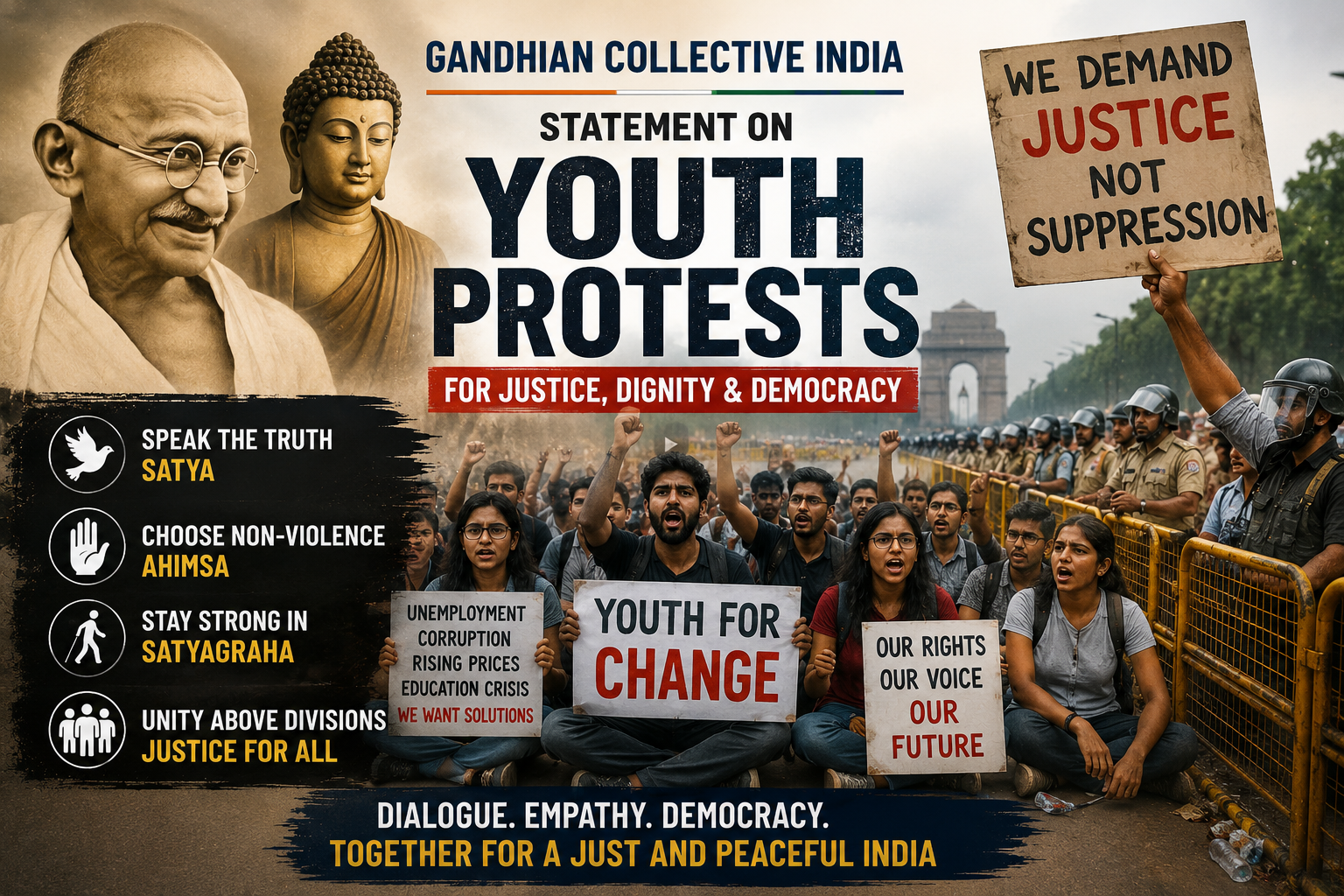
We view the recent deployment of state force against peaceful youth protesters in New Delhi with deep anxiety. In a true democracy, the right to peaceful dissent is an absolute constitutional principle rather than a privilege granted by the state. Resorting to intimidation and coercive measures against citizens only undermines India’s democratic foundation, dilutes our rich traditions, and erodes the nation’s moral authority on the global stage.
This growing unrest stems directly from mounting public anxiety over critical systemic crises, including severe unemployment, rising prices, corruption, and a struggling education system. When ordinary people, particularly the youth, feel that their legitimate grievances are being ignored by Parliament, political institutions, and administrative channels, they naturally turn to peaceful public mobilization. It is the fundamental responsibility of any democratic government to meet such moments with empathy, accountability, and meaningful dialogue, rather than suppression.
In this testing time, we appeal to the protesting youth to remain firmly anchored in the core values of Mahatma Gandhi and Lord Buddha. True strength lies in maintaining the path of Satya (Truth), Ahimsa (Non-violence), and disciplined Satyagraha. History repeatedly demonstrates that the enduring power of a people’s movement depends on its moral legitimacy and its ability to win the trust of the wider public; while violence compromises a just cause, disciplined non-violence strengthens it.
We are reminded of how a young Mohandas Gandhi transformed personal humiliation in South Africa into a historic force for freedom through moral courage and constructive organization, a philosophy that later shaped the very identity of our nation.Therefore, we call upon all citizens, educational institutions, social organizations, and community leaders to stand in solidarity with the democratic aspirations of our youth.
Simultaneously, we urge the Government of India to exercise institutional restraint, respect constitutional rights, and engage with the protesters with humility and sincerity. Lasting peace can never be built on coercion; it can only emerge from a genuine commitment to justice and trust.
Ultimately, this movement offers a profound glimpse of hope for the future. By rising completely above caste and religious divisions, the youth have rejected communal politics and united in a shared demand for justice. This widespread, direct support from people across the nation proves that at a time when democratic values face systemic threats, the courageous stand of our youth—the makers of tomorrow—holds immense historical significance.