
Dr. Siby K. Joseph
Director, Sri Jamnalal Bajaj Memorial Library and Research Centre for Gandhian Studies, Sevagram Ashram Pratishthan, Sevagram, Wardha, Maharashtra, India
Email: directorjbmlrc@gmail.com
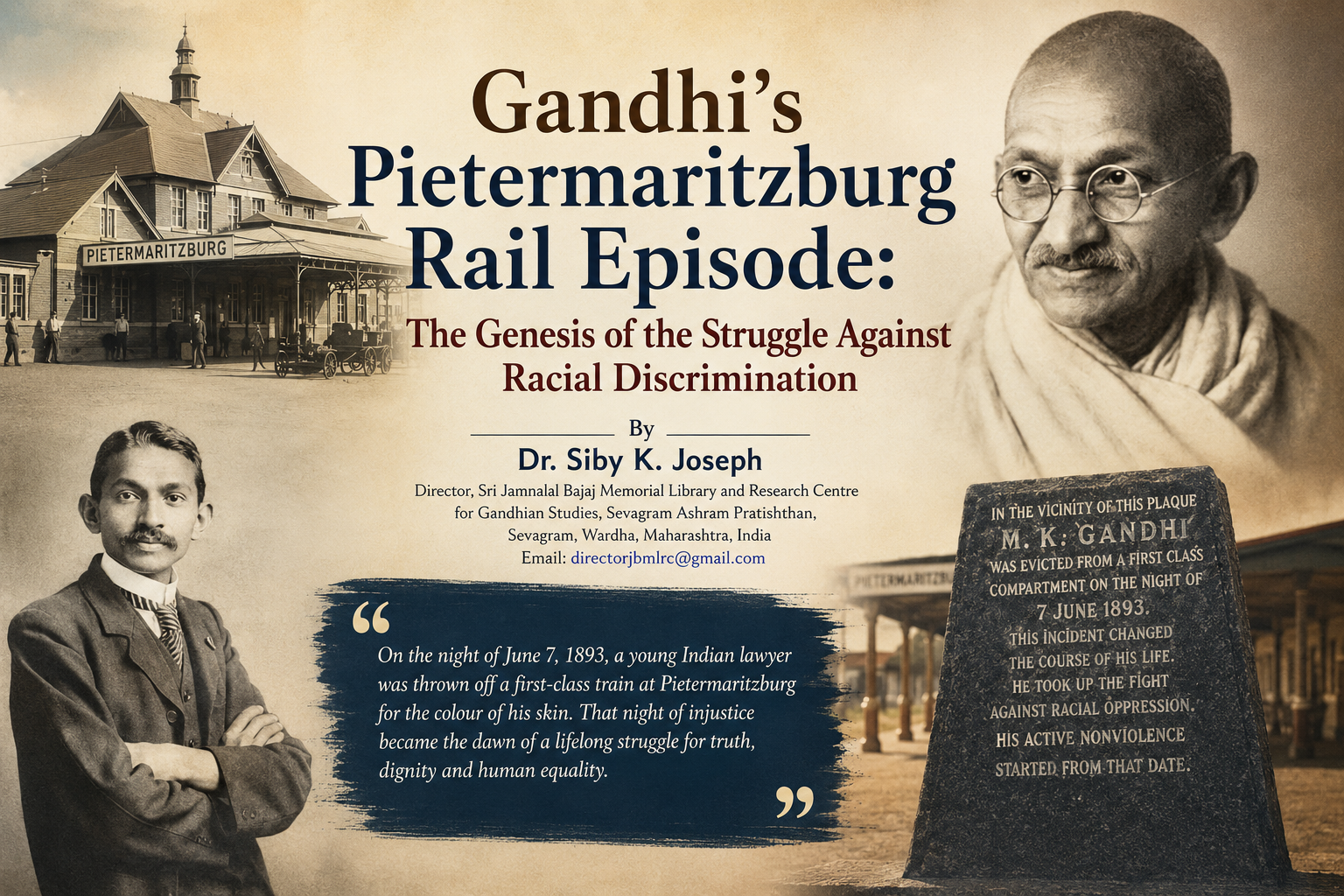
This paper explores the transformative impact of the Pietermaritzburg railway station incident on June 7, 1893, evaluating it as the foundational moment of Mohandas K. Gandhi’s philosophy of nonviolent resistance (Satyagraha). It addresses contemporary academic critiques regarding Gandhi’s early racial attitudes in South Africa, utilizing historical evidence from his early letters and organizational reports to counter claims of prejudice. Finally, it traces how his early encounters with apartheid shaped his lifelong crusade against structural injustices, including the caste hierarchy and untouchability in India.
Initial Encounters with Prejudice
Young Mohandas Karamchand Gandhi arrived in South Africa in May 1893 to provide legal counsel for the merchant Dada Abdulla. Almost immediately, he was confronted by the harsh realities of institutionalised racial discrimination. During an early visit to the Durban Court, the presiding magistrate ordered Gandhi to remove his turban. Recognising this as an assault on his cultural dignity, Gandhi refused and walked out of the courtroom.
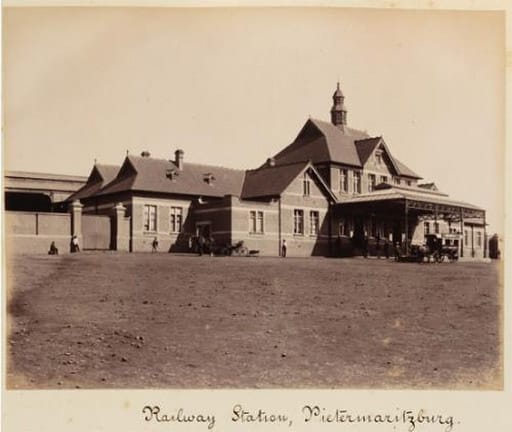
However, the definitive catalyst for his transformation occurred on the night of June 7, 1893, during a train journey from Durban to Pretoria. Despite holding a valid first-class ticket, Gandhi was confronted by a white passenger who objected to his presence in the compartment. Ordered to move to the third-class carriage, the young attorney stood his ground and protested the injustice. His defiance resulted in him being forcibly ejected from the train at the Pietermaritzburg Railway Station.
Left to endure the bitter winter cold in the station’s waiting room, Gandhi faced a critical crossroads. This fateful night became the ultimate turning point in his life, altering the trajectory of human rights movements in both South Africa and India.
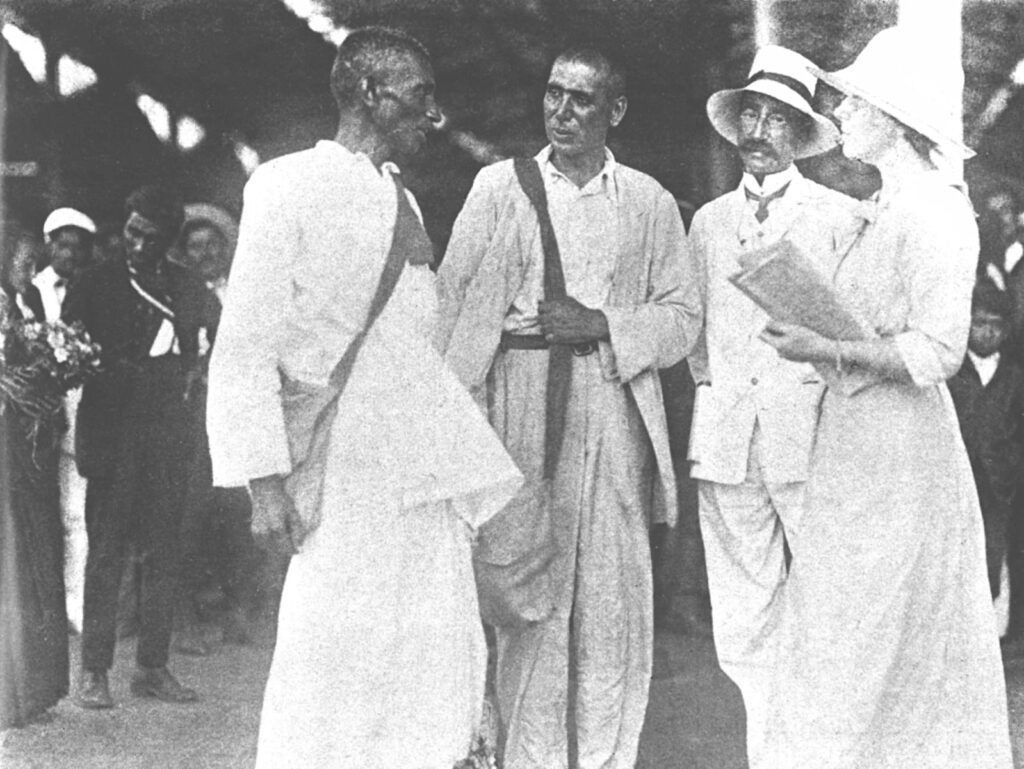
Gandhi in discussion with co-workers at Maritzburg Railway Station, South Africa, December 1913
The Alchemy of Creative Nonviolence
Reflecting on the raw humiliation of that night, Gandhi looked past his personal grievance. He realized that his experience was merely a symptom of a deeper systemic disease: colour prejudice. Rather than succumbing to common impulses of hatred, disgust, or revenge, Gandhi responded with profound creativity. He chose to look at the issue through a public lens, committing himself to uprooting global racial discrimination through nonviolent means.
Decades later, the historic weight of this transformation was beautifully summarized by Nelson Mandela:
“India gave us M.K. Gandhi; we returned him as Mahatma Gandhi after two decades.”
In an interview with the American Christian missionary Dr. John R. Mott, biographer Louis Fischer notes that when asked to name the most creative experience of his life, Gandhi unhesitatingly replied:
“The story of the night in the Maritzburg station.”
This event marked the birth of Satyagraha in its earliest, embryonic form. It sowed the seeds of active nonviolence (Ahimsa). Gandhi’s immediate actions proved his newfound resolve. The following day, he booked another first-class ticket to continue his journey, fully prepared to face further hostility. On this second leg, a fellow English passenger intervened on his behalf, asserting that Gandhi had every right to travel in first class. For Gandhi, this reinforced a vital lesson: fighting for human justice required personal courage and a willingness to accept consequences.
Today, the Pietermaritzburg Railway Station stands as a living monument to this legacy. The entrance features twin statues of the Mahatma, complemented by a commemorative plaque at the site of his eviction that reads:
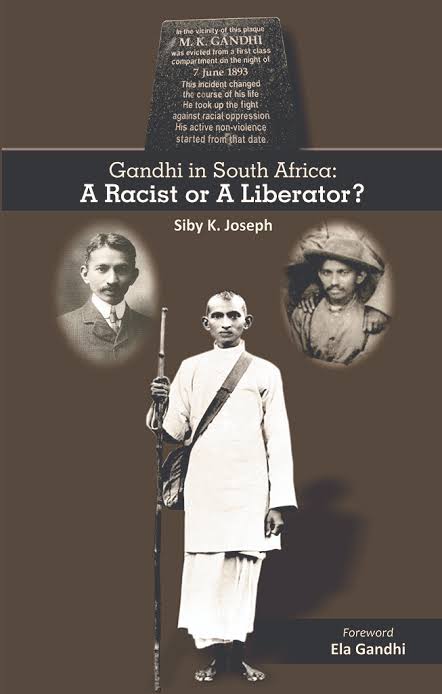
“In the vicinity of this plaque, M.K. Gandhi was evicted from a first-class compartment on the night of June 7, 1893. This incident changed the course of his life. He took up the fight against racial oppression. His active nonviolence started from that date.”
Debunking the Revisionist Narrative
In recent years, revisionist scholars have critiqued Gandhi’s early years in South Africa, claiming he held racist views, remained indifferent to indentured Indian labourers, and harboured disdain for native Africans. It was to directly address and dismantle these historical mischaracterizations that I authored the book, Gandhi in South Africa: A Racist or Liberator?
The thesis that Gandhi began his journey as a racist and only evolved much later is factually incorrect. His earliest writings and organizational efforts in South Africa explicitly contradict this claim:
The Natal Indian Congress Report (August 1895): This document explicitly details Gandhi’s extensive, hands-on legal and social work dedicated to protecting the rights of vulnerable, indentured Indian labourers.
The Times of Natal Letter (October 25, 1894): Gandhi publicly argued that racial discrimination fundamentally violated the core tenets of Christian theology.
Open Letter to the Legislative Council (1894): Gandhi systematically challenged institutional segregation, advocating for cross-cultural human dignity.
As human rights activist Ela Gandhi aptly noted in her foreword to my book:
“A person who advocated love of all life cannot be racist.”
From the moment he was thrown off the train, Gandhi’s struggle was hardwired against the foundational architecture of what would later become the formal apartheid regime.
From South Africa to India: A Universal Vision
Gandhi recognized that institutional injustice was not unique to South Africa. He understood that the Hindu community’s treatment of untouchables in India was an equally grave manifestation of oppression, driven by rigid caste hierarchies. Consequently, when he returned to his homeland, dismantling caste discrimination became an absolute priority within India’s struggle for independence.
By grounding his political philosophy in his raw personal experiences of marginalisation—both at home and abroad—Gandhi formulated a universal framework of justice. The lonely night at the Pietermaritzburg station expanded far beyond a local railway episode; it remains an enduring source of inspiration for marginalized peoples fighting against oppression across the globe.
Note: This paper was prepared on the occasion of the anniversary of the Pietermaritzburg Railway Episode .