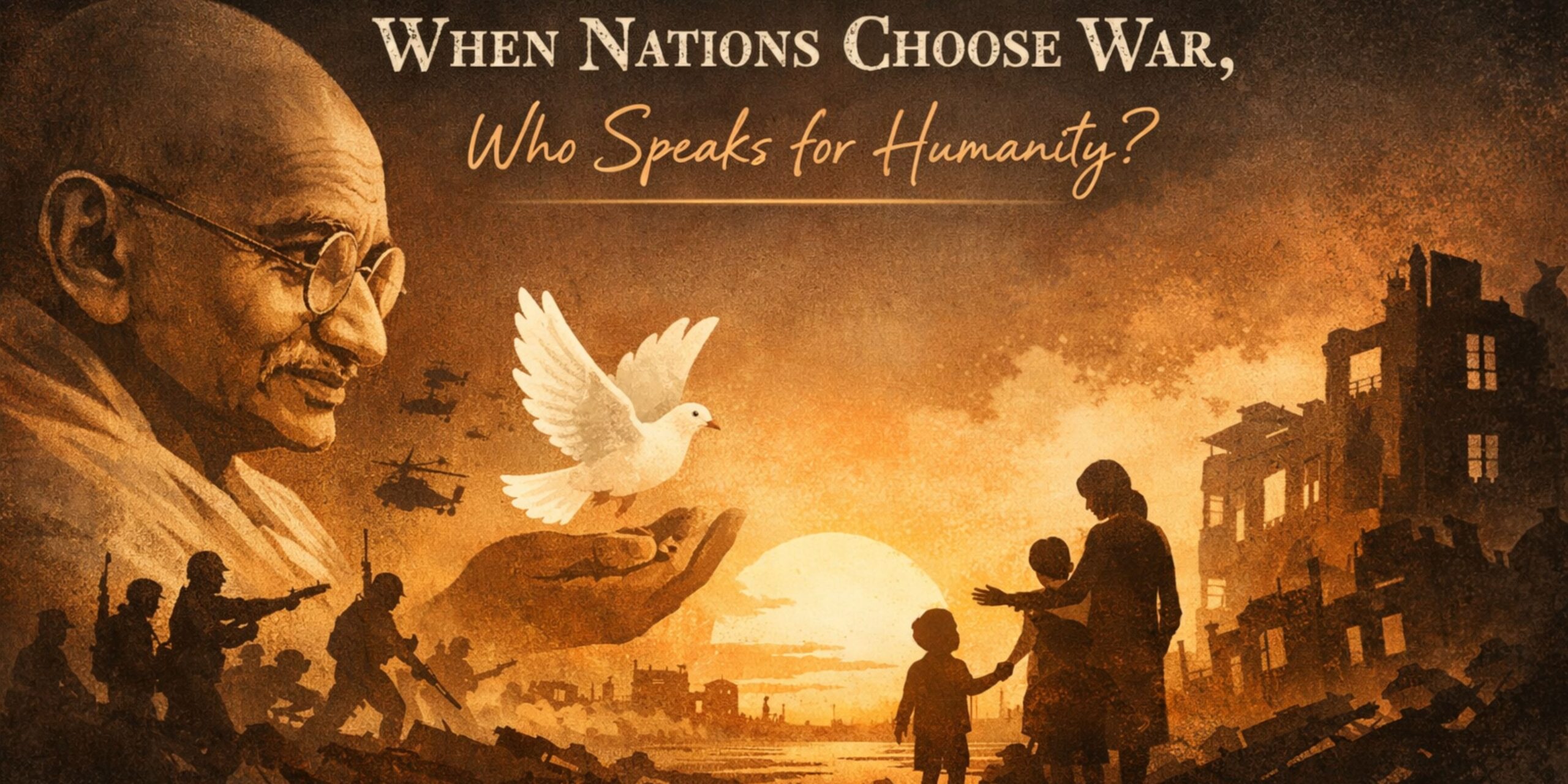
A Gandhian Reflection on America–Iran Conflict
There is a strange silence in the world today.
Not the silence of peace…
but the silence that comes when bombs speak louder than human voices.
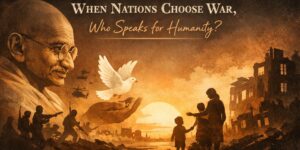
The conflict between America and Iran is being discussed everywhere—in newsrooms, in political debates, in strategy rooms. But somewhere in all this noise, a simple question is getting lost:
Where is the human being in this war?
Beyond Borders, There Are People
A soldier is not just a soldier.
He is someone’s son.
A city is not just a “target.”
It is someone’s home.
A nation is not just a power.
It is millions of lives breathing, hoping, fearing.
Yet war reduces all of this into maps, numbers, and victories.
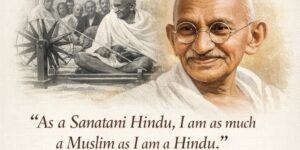
Mahatma Gandhi never saw the world this way. For him, every life—whether Indian, American, or Iranian—had equal worth.
He did not believe in enemies.
He believed in misguided humanity.
What Would Gandhi Ask Today?
If Gandhi were alive today, he would not ask,
“Who is right?”
He would ask,
“Who is suffering?”
And the answer would be simple:
Everyone.
Because in war:
- The one who attacks loses compassion
- The one who defends loses peace
- And the innocent lose everything
Gandhi warned us long ago:
Violence may seem powerful, but it leaves behind a deeper weakness—the loss of our humanity.
The Illusion of Victory
Every war promises victory.
But what is victory?
Is it:
- Destroyed cities?
- Broken families?
- Generations raised in anger and fear?
Or is it simply the illusion that power has been proven?
Gandhi’s idea of victory was very different.
For him, true victory was:
- Winning hearts, not territories
- Ending hatred, not lives
- Building trust, not fear
In today’s world, this may sound idealistic.
But perhaps what we call “practical” is what keeps leading us back to war.
The Courage to Choose Peace
Peace is often misunderstood.
It is not weakness.
It is not surrender.
Peace is the courage to:
- Stop when you can continue
- Listen when you can dominate
- Forgive when you can destroy
Gandhi called this Ahimsa—not just non-violence, but active love.
Imagine if even one side in this conflict chose that path.
Not as a strategy…
but as a moral decision.
Would it not change everything?
Our Responsibility
It is easy to think this is a matter for governments.
But Gandhi never waited for governments.
He believed that change begins with people.
So today, our role is not to analyze war like spectators.
Our role is to:
- Refuse to normalize violence
- Speak for peace, even when it feels unpopular
- Remember that humanity is greater than nationality
Because silence, too, becomes a side.
A Quiet Prayer for the World
In times like these, perhaps what the world needs is not more arguments…
…but more conscience.
A pause.
A reflection.
A return to humanity.
Let us not ask who will win this war.
Let us ask:
Will humanity survive it?
Global Gandhi Thought
“The world does not need stronger weapons.
It needs stronger compassion.”