
An Interview with Dr. Siby K. Joseph
Sevagram Ashram served as Mahatma Gandhi’s de facto political headquarters and the central hub for the Indian independence movement from 1936 until 1948. It was far more than a place of residence; it was a “living laboratory” where Gandhi’s most radical political ideas were tested through practical application. In this space, the traditional boundaries between the personal, the social, and the political were dissolved, creating a new model of politics rooted in ethics.
Drawing upon historical records and the scholarly insights of Dr. Siby K. Joseph, this exploration examines the actions of the Mahatma through a purely political dimension. It traces his journey from the leadership of the Indian National Congress to his strategic “retirement” in Wardha, where he initiated a deeper form of political service aimed at the total transformation of society.
The following questions and answers demonstrate how Sevagram Ashram became the preparatory ground for Nai Talim, Individual Satyagraha, the Constructive Programme, and the Quit India Movement. Sevagram Ashram was the foundational site for a vision of “alternative politics” that continues to challenge modern political thought even today.
This interview was conducted by a researcher in connection with his doctoral dissertation.
1.Sevagram Ashram illuminates Bapu’s philosophy of life; what impact did Mahatma Gandhi’s political ideas have on the institution?
Sevagram Ashram illuminates Bapu’s philosophy of life; it was not merely Mahatma Gandhi’s abode but served as a living laboratory for his social, economic, and political experiments. All his experiments, including his political actions, determined the course of Indian history and the freedom movement. It would be an understatement to limit his impact to the Ashram alone; while his actions shaped the daily life and work of the institution, their influence resonated far beyond, guiding the entire nation and the world at large.
2. Provide brief information regarding Mahatma Gandhi’s political thoughts specifically in the context of Sevagram Ashram.
To understand Gandhi’s political ideas in the context of Sevagram Ashram, we must first understand his vision of politics and why he entered the field. Mahatma Gandhi believed that human life is an indivisible whole. He felt that politics, especially in a colonized nation, encircled life so completely that one could not ignore it if they wished to serve humanity. He stated:
“Human life being an undivided whole, no line can ever be drawn between its different compartments, nor between ethics and politics.” (Harijan, 30-3-1947)
In his autobiography, Gandhi wrote: “To see the universal and all-pervading Spirit of Truth face to face, one must be able to love the meanest of creation as oneself… That is why my devotion to Truth has drawn me into the field of politics.” When Gandhi used the word “religion,” he was not referring to dogmas or sectarianism, but to universal moral principles—Truth (Satya) and Non-violence (Ahimsa). He argued that he could not lead a religious life without identifying with all of mankind, which necessitated political action. He viewed politics bereft of religion as “absolute dirt,” believing that the welfare of nations must be the concern of any seeker of Truth.
This philosophy explains the real transition of Gandhi in Wardha /Sevagram, which differed significantly from his earlier political roles. Although Gandhi was the President of the Indian National Congress in 1924 and led the Civil Disobedience Movement, the post-1930 period marked a transformative shift. Following the Salt March and the closure of Sabarmati Ashram, Gandhi relocated to Wardha in 1933. In October 1934, he stopped his formal political association with the Congress by resigning, citing a fundamental divergence in outlook regarding the significance of the spinning wheel.
Believing that true independence must be rooted in the “toiling millions,” he turned his focus toward the All-India Village Industries Association (AIVIA) at Maganwadi. This journey of decentralization culminated on April 30, 1936, when he moved to the remote village of Segaon—later renamed Sevagram. Here, he embraced and identified with the life of villager and engaged in village service, proving that his exit from party politics was actually an entry into a deeper, more direct form of political service. He treated the village as the primary unit of a new, ethical social order, making Sevagram the living embodiment of his political philosophy.
3. Which significant political decisions were made at Sevagram Ashram that fundamentally changed the course of Indian politics?
Sevagram ashram remained as an epicentre for the Indian freedom struggle and political action. Several pivotal political decisions made here fundamentally altered the trajectory of Indian politics.
The Basic Education
Scheme of 1937 was meticulously shaped under Mahatma Gandhi’s guidance at the Sevagram Ashram. For Gandhi, Basic Education (Nai Talim) was not merely an educational project; it was the “social and economic foundation” for his political goal of Purna Swaraj (Complete Independence). By making education craft-centered and self-supporting at Sevagram, he was training a new generation of citizens who would not need to rely on the British colonial state for employment or survival.
The Government of India Act of 1935 paved the way for provincial autonomy, and in July 1937, Congress governments took office in several provinces. Gandhi urged these ministries to prioritize educational reform and presented the nation with a self-supporting scheme of education. Coinciding with the silver jubilee of the Marwadi High School in Wardha, the National Education Conference was held on 22–23 October 1937. The conference resolved to provide free and compulsory education for seven years on a nationwide scale in the mother tongue and endorsed Gandhi’s proposal for craft-centered education. Subsequently, a committee chaired by Dr. Zakir Hussain prepared a detailed plan and syllabus. The first school based on these principles was opened at Sevagram Ashram in April 1939.
This movement spread from Sevagram across the entire country. Even after the launch of the Quit India Movement in 1942 and his subsequent imprisonment, Gandhi’s vision evolved. .” In January 1945, a conference of national workers was convened at Sevagram to institutionalize this “cradle-to-grave” vision. The resulting scheme covered four distinct stages: Pre-basic, Basic, Post-basic, and Adult Education. Sevagram served as the primary testing ground for these schemes, successfully liberating learning from the four walls of the classroom.
Individual Satyagraha
Following the British government’s unilateral declaration involving India in World War II without national consent, Mahatma Gandhi utilized Sevagram Ashram as his laboratory to refine a disciplined, non-violent response. This process culminated in the Individual Satyagraha of 1940–41, a moral campaign designed to affirm the right to free speech while avoiding mass upheaval during the war.
The movement was formally launched in October 1940, with Gandhi handpicking individuals based on their unwavering commitment to non-violence. He chose Acharya Vinoba Bhave as the first Individual Satyagrahi, followed by Jawaharlal Nehru as the second. As the movement progressed, a large number of Satyagrahis were arrested, demonstrating India’s principled refusal to be a silent partner in the colonial war effort.
Constructive Programme
In 1941, while residing at Sevagram Ashram, Mahatma Gandhi finalised a definitive version of his tract, Constructive Programme: Its Meaning and Place. Although the seeds of these ideas were ingrained in his actions in South Africa and later manifested during his non-violent struggles in India, it was at Sevagram that they were codified into a concrete plan of action for the nation. Originally addressed to the members of the Indian National Congress, this document served as a moral and strategic guide for the independence movement.
Gandhi stated that the Constructive Programme was the “truthful and non-violent way of winning Purna Swaraj.” By establishing various headquarters for these activities in and around Wardha to serve as “laboratories of experiment,” he demonstrated that political independence was inseparable from social and economic reform.
For Gandhi, this 18-fold program was the main driver of his political action and a prerequisite for civil disobedience. He believed that if the nation successfully implemented these 18 points—ranging from communal unity and the removal of untouchability to Khadi and village industries—the British would not need to be “driven out”; the foundations of their rule would simply collapse as India became self-governing from within.
Quit India Movement
The seeds of the decisive movement to end British rule were sown in Mahatma Gandhi’s mind during his stay at Sevagram Ashram in 1942. Although Gandhi had formally resigned from the Indian National Congress in 1934, he continued to provide patronage and strategic guidance to the party and its leadership.
In July 1942, Sevagram witnessed a historic meeting of the Congress Working Committee (CWC). After intense deliberations under Gandhi’s leadership, the committee concluded that the British government must be compelled to exit India through a massive struggle. The resulting resolution, passed on July 14, 1942, was originally drafted by Gandhi himself and subsequently modified during discussions to align with the perspectives of Pandit Jawaharlal Nehru and Maulana Azad. Ultimately, the CWC authorized Gandhi to take full charge of the movement and regulate it in whatever manner he deemed fit. This pivotal moment marked Sevagram not only as the cradle of the Quit India Movement but also as the de facto capital of a nation on the brink of independence.
4. What was the impact of the Non-Cooperation Movement’s principles on Sevagram Ashram?
The relationship between the Non-Cooperation Movement (1920–22) and Sevagram Ashram is not direct in a chronological sense, but rather ideological and historical. Sevagram Ashram was established in 1936, nearly 14 years after the Non-Cooperation Movement had ended. However, the values and programmes for which Gandhi laid the foundation during the Non-Cooperation era found their complete and matured expression later in the activities of Sevagram Ashram.
5. What fundamental information and original ideas did Mahatma Gandhi provide regarding the drafting of the Indian Constitution?
In 1938, Mahatma Gandhi played a direct and central role in drafting the Swaraj Constitution for the princely state of Aundh (now in Maharashtra), this constitution, which was ratified on January 21, 1939, reflected Gandhi’s vision of decentralized governance. It was from Sevagram Ashram, under Gandhi’s guidance the final draft was prepared alongside Maurice Frydman (a Polish-Jewish engineer) and the Raja’s son, Appasaheb Pant. The Aundh Experiment endured until 1947, when the state merged with the Indian Union. This was the first time an Indian monarch, Raja Bhavanrao Shriniwasrao Pant Pratinidhi, abdicated his divine right to rule to grant full self-government to his people.
While Gandhi did not draft the legal Constitution of India, he endorsed the “Gandhian Constitution for Free India” (1946) written by Shriman Narayan Agarwal an interpreter of Gandhian ideas. This document is the most authentic record of how Gandhi envisioned the legal and political structure of the nation. Gandhi wrote a foreword for this draft, stating that although he had not examined every word, the brochure contained the fundamental principles he stood for. “…. the brochure contains ample evidence of the care bestowed upon it by the author to make it as accurate as he could. There is nothing in it which has jarred on me as inconsistent with what I would like to stand for.”
The document drafted by Shriman Narayan strongly advocated for a decentralised political and administrative structure, with village panchayats serving as the foundational units of governance. In this model, these primary units aggregated upward to form higher levels of government, creating a “bottom-up” democracy. Unlike the modern administrative setup, these village panchayats were granted extensive powers, including judicial functions.
A hallmark of the document was the coupling of fundamental rights with fundamental duties; it explicitly stated that the enjoyment of rights is contingent upon the performance of duties.
6. Why did Mahatma Gandhi not return to active party politics after serving as the President of the Indian National Congress?
Mahatma Gandhi never truly “left” politics; rather, he redefined it. He shifted the centre of political gravity from the halls of power to the huts of the poor and downtrodden living in the innumerable villages of India. This transition became most evident when he moved to Wardha and subsequently decided to retire from the Indian National Congress. His departure was not an exit from public life, but a strategic shift toward the grassroots political activity necessary to achieve the Purna Swaraj of his dreams.
By 1934, Gandhi recognized a growing and vital difference in outlook between himself and many Congressmen, particularly regarding the upliftment of Indian villages through the revival of Khadi and village industries. In a press statement on September 17, 1934, he pinpointed these fundamental differences:
“I put the spinning-wheel and khadi in the forefront… Nevertheless, my conviction is growing that if India is to win complete independence in terms of the toiling millions and through unadulterated non-violence, the spinning-wheel and khadi have to be as natural to the educated few as to the partially unemployed and semi-starved millions… The spinning-wheel is thus an emblem of human dignity and equality in the truest sense of the term. It is the nation’s second lung. We are perishing because we are using only one lung.”
Gandhi feared that if the “Khadi clause” remained in the Congress constitution without the “living faith” of the majority of its members, it would lose its integrity. Consequently, he formally resigned from the Congress on October 30, 1934, to free the party from his influence and to focus entirely on village development.
Even outside the party, Gandhi’s actions remained profoundly political. At the Bombay session in October 1934, the Congress agreed to his proposal for the revival of village industries. This led to the formation of the All-India Village Industries Association (AIVIA), or Akhil Bharat Gram Udyog Sangh, under the guidance of Gandhi and J.C. Kumarappa.
In 1936, his move to Sevagram marked the ultimate stage of this political journey. Here, he demonstrated that politics was not just about elections or conventional political activity, but about building a self-reliant social order conducive to the attainment of Swaraj through a focus on the Constructive Programme. From this remote village, he continued to direct the nation’s most significant political movements, including the Quit India Movement of 1942.
Gandhi’s commitment to this “politics of service” remained steadfast until the very end. Just one day before his assassination in 1948, he drafted a proposal (often called his “Last Will and Testament”) suggesting that the Indian National Congress, having achieved political independence, should be disbanded and transformed into a Lok Sevak Sangh (Association of Servants of the People). This final act confirmed that throughout his life, he was engaged in a continuous political struggle—one aimed at social transformation rather than the mere acquisition of state power.
7. What changes did Gandhi’s values of Truth (Satya), Non-violence (Ahimsa), and Non-possession (Aparigraha) bring to the political life of Gandhian institutions and the local people of Wardha district?
Gandhi’s stay in Wardha and Sevagram energized the institutions formed under his guidance for the propagation of his ideals. To this day, we can see the enduring influence of these Gandhian institutions. His leadership transformed the political life not only of the local people in the Wardha district but of the entire nation. Limiting the scope of his contributions solely to the local level would be belittling his true impact, as Wardha served as the laboratory for a vision that sought to reshape the world.
8. What message did Mahatma Gandhi give to the nation and the residents of the Ashram during the Quit India Movement (1942)?
During the 1942 Quit India Movement, Mahatma Gandhi delivered two distinct yet equally significant messages: one for the internal discipline of the Sevagram Ashram residents and another for the political mobilization of the entire nation.
On August 1, 1942, before his departure for the historic AICC session in Bombay, Gandhi issued a stern warning to the residents of Sevagram. He prepared them for the inevitable state repression, emphasizing that life in the Ashram would soon become a test of survival:
“Those who are in the Ashram should know that anything can befall them. It is possible that the Government may even stop the supply of our food. Therefore, only those should stay here who are ready to live even on leaves. The rest should leave. It will be a matter of shame for us if they leave after the troubles begin.”
It was a reflection of Gandhi’s belief that the Ashram must serve as the primary moral unit of resistance, where residents were expected to endure extreme hardship rather than surrender.
Following the adoption of the Quit India resolution in Bombay on August 8, 1942, Gandhi gave the nation the mantra of “Do or Die” (Karo ya Maro). The British government retaliated swiftly, arresting Gandhi and the members of the Congress Working Committee (CWC) in the early hours of August 9.
In his final message to the country, written at 5:00 a.m. on the morning of his arrest, Gandhi defined the ultimate stakes of the struggle:
“Everyone is free to go to the fullest length under ahimsa. Complete deadlock by strikes and other non-violent means. Satyagrahis must go out to die, not to live. They must seek and face death. It is only when individuals go out to die that the nation will survive. Karenge ya marenge (We will do or die).”
Gandhi’s call to the nation was so powerful and it inspired people. The whole country was electrified and people jumped into the vortex of freedom struggle.
9. In what form have Gandhi’s political ideas been incorporated into the Indian Constitution?
During the drafting of the Indian Constitution, the Gandhian model of decentralization was initially dismissed by many as impractical and utopian. This omission prompted Gandhi to state publicly: ‘What good will the Constitution be if the village does not find its due place in it?’
As discussions in the Constituent Assembly progressed, many members recognized a philosophical vacuum and began to insist on the inclusion of Gandhian principles. Consequently, a compromise was reached; Gandhian ideals were incorporated primarily in the form of the Directive Principles of State Policy. However, because these principles were made non-binding and non-justiciable, they remained moral exhortations for the state rather than enforceable legal mandates, reflecting the significant gap between Gandhi’s ‘Village Republics’ and the centralized parliamentary system that was ultimately adopted.
- Are Mahatma Gandhi’s political thoughts still relevant in today’s era of political and social challenges?
In an era where the world faces the centralization of power and authoritarian tendencies, Gandhi’s advocacy of decentralized governance and the devolution of power is more relevant than ever. The significance of Gandhi’s system lies in a form of democratic governance where the fulcrum of power remains firmly with the people at the grassroots level. This is why philosopher Ramin Jahanbegloo identifies Gandhi as one of the most significant non-Western theorists of democracy. Gandhi’s political thought remains a vital response to the failures of modern liberal politics. Just as Gandhi’s ideas provide a fix for political centralization, they are equally essential for addressing social problems like the communal divide, which continues to plague modern society.
Gandhi’s political action was rooted in the principle of Sarva Dharma Sambhava—the belief that all religions are different paths leading to the same Truth. This is exceptionally relevant today as a corrective to the increasing communal divide and social polarisation.
In an age of artificial intelligence, social media ,his practice of communal living and inclusive prayer—as seen at Sevagram—remains a powerful model for fostering social cohesion and national integration.
11. What suggestions would you give to make Gandhian institutions more effective and aligned with Gandhi’s vision in the future?
To make Gandhian institutions more effective and aligned with his vision, we must return to the roots of Gandhi’s principles while meticulously contextualising them to address the contemporary challenges facing modern society.
About the Interviewee
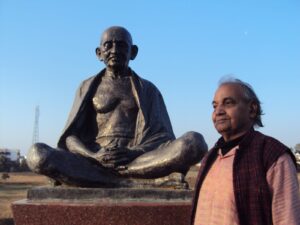
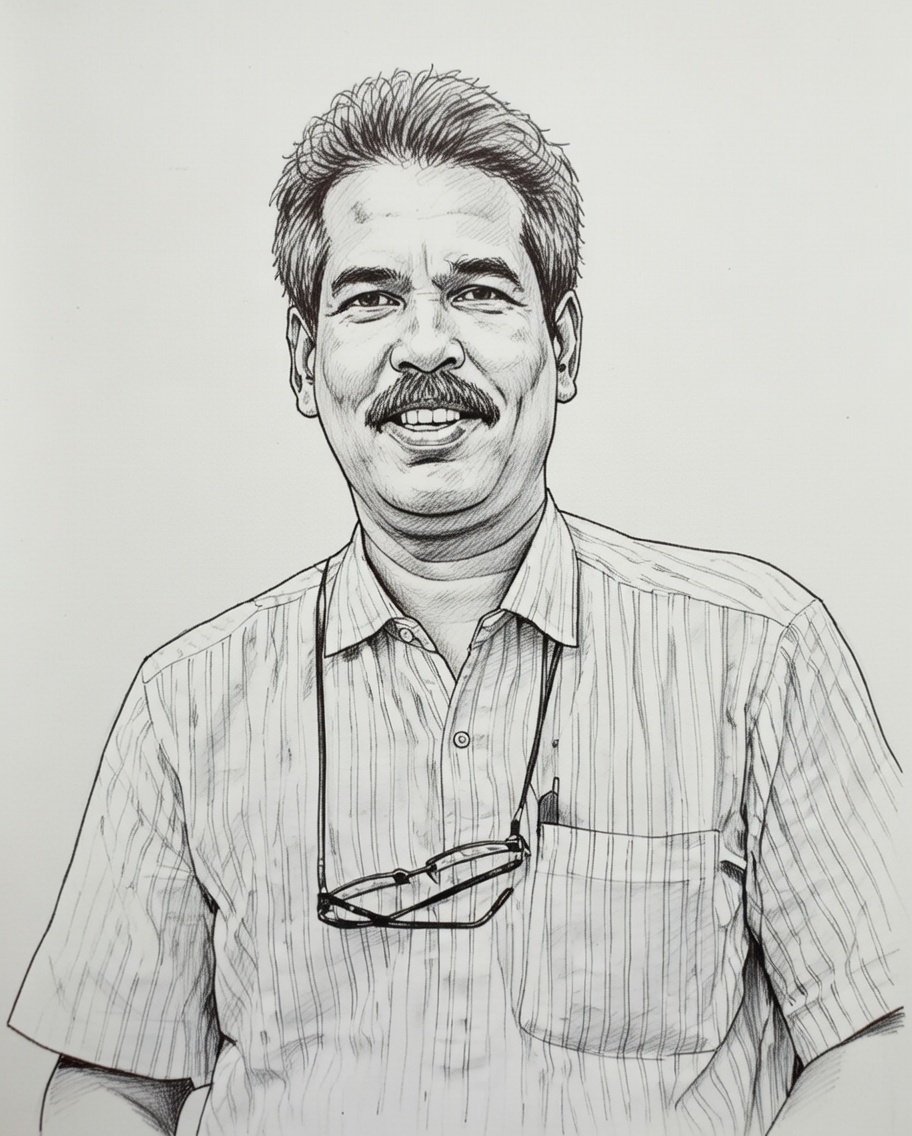
Dr. Siby K. Joseph is the Director of the Sri Jamnalal Bajaj Memorial Library and Research Centre for Gandhian Studies, under the Sevagram Ashram Pratishthan, Sevagram, Wardha (Maharashtra, India).
A distinguished Gandhian scholar, he is the lead author of the book, The 1924 Belgaum Congress Session: A Pictorial Narrative of Mahatma Gandhi’s Presidential Debut. He also co-edited the volume Deliberative Democracy: Understanding the Indian Experience, published by Routledge (London and New York) in 2018. Furthermore, he contributed a significant chapter to the book Deliberative Democracy, Public Sphere and the Search for Alternative Politics in India: Gandhian Contributions. His research focuses on the intersection of Gandhian ethics, decentralised governance, and the evolution of non-violent political action.