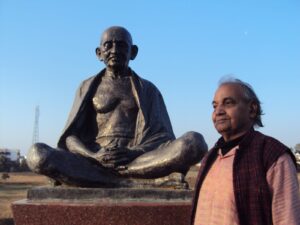

After resigning from the Indian National Congress in 1934, Gandhi made Wardha his home. He established the All-India Village Industries Association and shifted to an estate in Wardha donated by Jamnalal Bajaj. This estate was renamed Maganwadi in memory of Maganlal Gandhi and became the headquarters of the association.Gandhi, however, was in search of a typical village. Madeleine Slade (Mirabehn), Gandhi’s British disciple, identified a remote village called Segaon, located about four miles east of Wardha. This village is situated in central India, approximately 75 km from Nagpur. Gandhi decided to settle there, and in a letter addressed to Jamnalal Bajaj on March 19, 1936, he explained his vision for village life: “If Ba desires, then with her; otherwise, I would live alone in a hut in Segaon. Mirabehn’s [hut] may not suffice for me. As little expense as possible should be incurred in building the hut, and in no case should it exceed Rs. 100.”
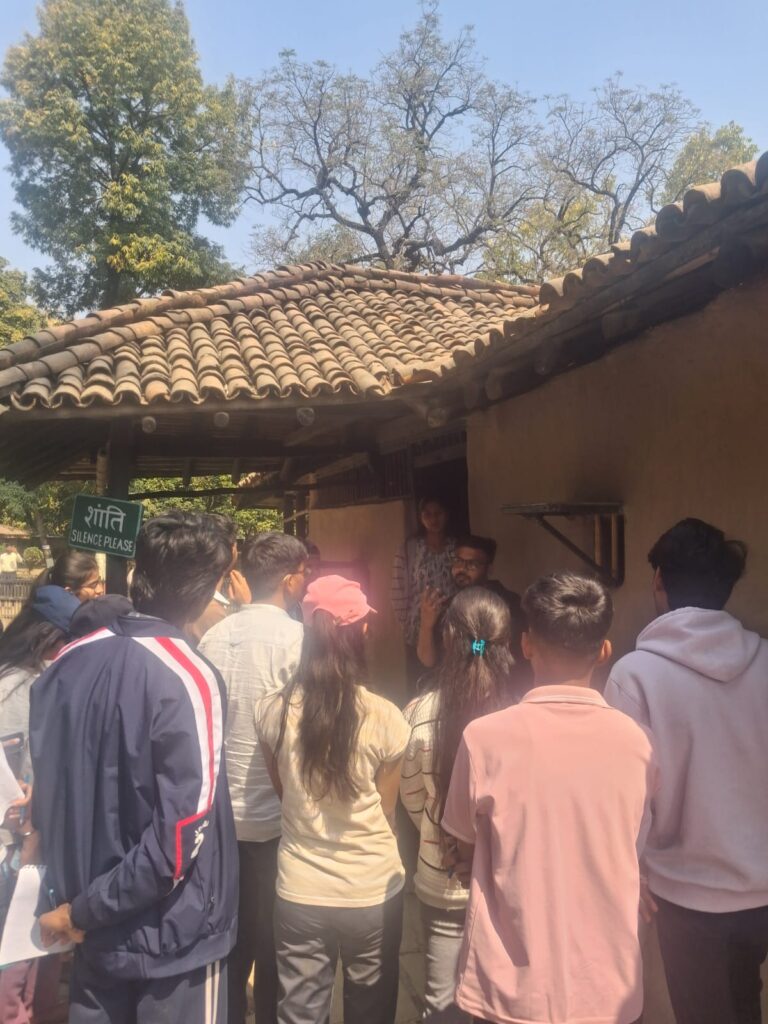
He visited the village of Segaon and expressed his desire to settle there in a speech delivered to the villagers after April 17, 1936. He said, “I shall try to serve you by cleaning your roads and your surroundings, by trying to render such help as I can if there is illness in the village, by teaching you self-help by way of helping you to revive your handicrafts. If you will cooperate with me I shall be happy; if you will not, I shall be content to be absorbed among you as one among the few hundreds that live here.”
On April 21, 1936, Gandhi wrote to Mirabehn that Jamnalal Bajaj had given full authority to commence building operations. Gandhi and his co-workers walked from Maganwadi to Segaon on April 30, 1936, reaching the spot in about two hours. From then on, this village became his headquarters. He initially stayed in a makeshift shanty made of bamboo mats under a guava tree, as his hut was not yet ready.
While Gandhi was away from Segaon, work on his residence proceeded adjacent to his first stay. The responsibility of building the hut was entrusted to Balwantsinha and the road to Munnalal Shah, under the guidance of Mirabehn. In the words of Balwantsinha, Mirabehn was their ‘commander’ and they were two ‘soldiers’. Gandhi moved to Segaon on June 16, 1936. He described the hut to close associates, writing to Amrit Kaur: “My hut has thick mud walls, twice the breadth of an ordinary brick wall. The mud is rain-proof. I think you will fall in love with the hut and the surroundings.”
Writing to Gangabehn, he gave exact specifications: “The room is large enough, 29 x 14, with a 7’ verandah running all round. In one corner of the verandah is a small kitchen and in another a bathroom for me. The walls are made of mud. The entire building is constructed with purely local materials.” In a letter to Amritlal V. Thakkar, he noted how overcrowded the room was: “Tukdoji occupies the corner in front of me, Khan Saheb the one beside me; Munnalal by Tukdoji’s side. Rajkumari’s bed is between me and Tukdoji… Ba, Lilavati and Manu accommodate themselves where they can.”
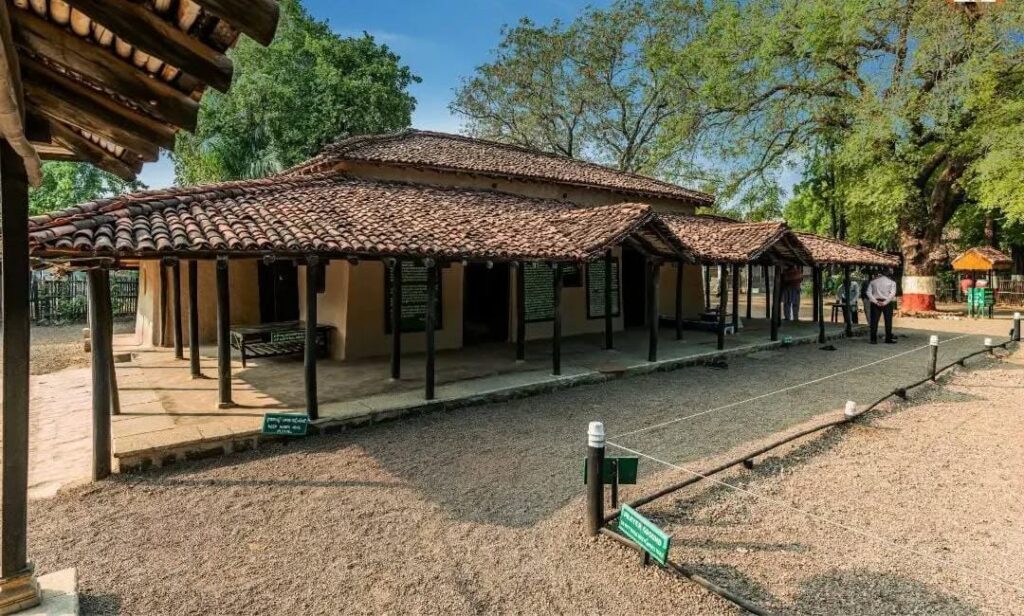
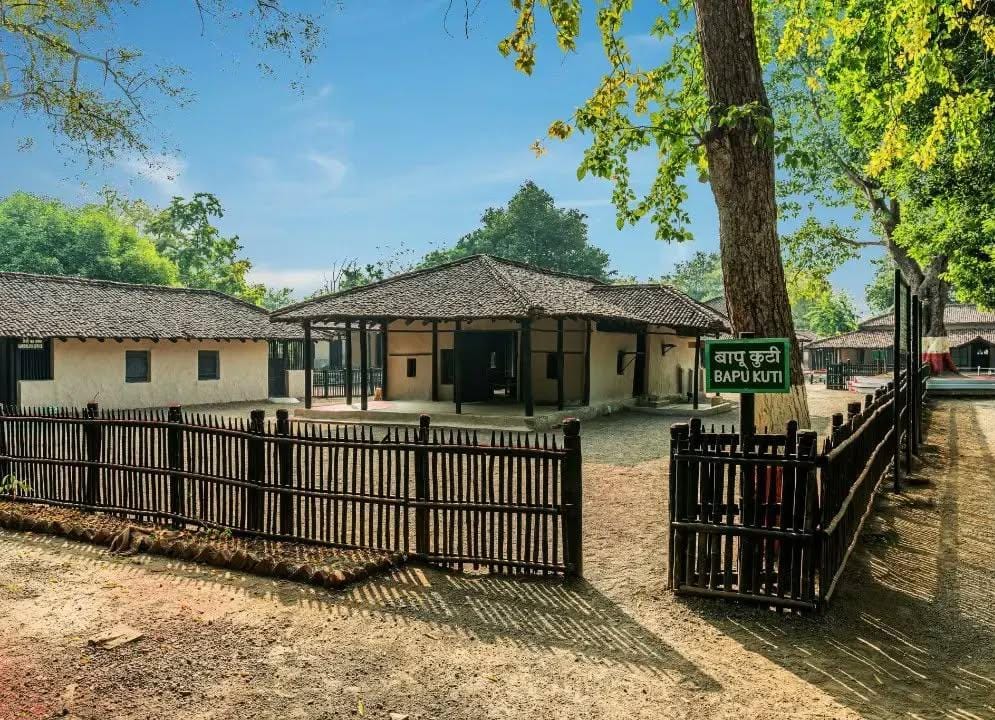
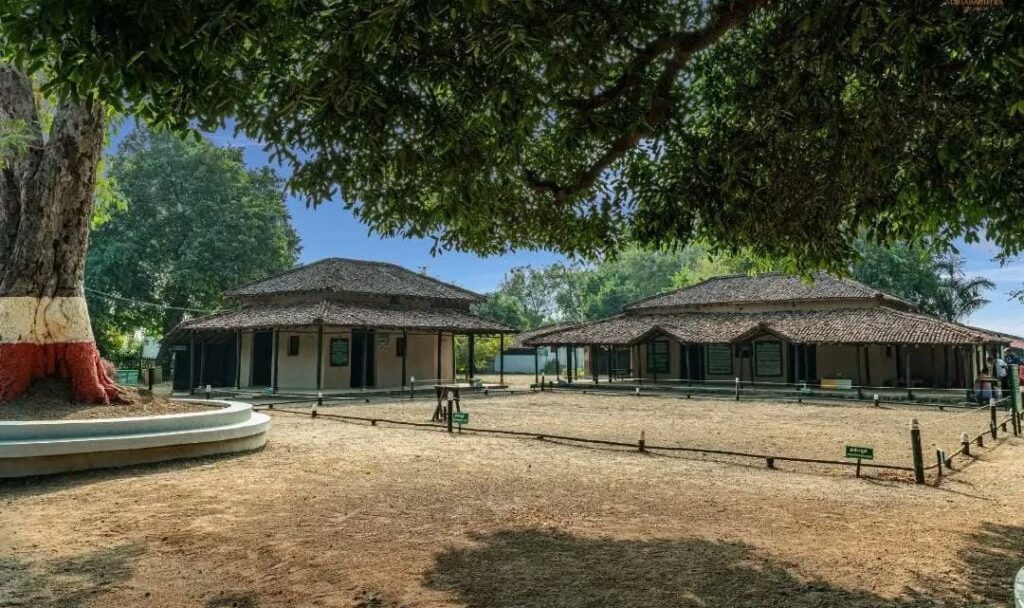
This first building at Segaon, later renamed Sevagram, came to be known as Adi Niwas. Another hut was built for Kasturba Gandhi in 1936. In February 1937, a hut was built for Mirabehn, which she used for teaching spinning and carding. This hut, later used by Gandhi himself, is known as Bapu Kuti. By 1940, Segaon was officially renamed Sevagram. Because his first residence was overcrowded, Gandhi shifted to Mirabehn’s hut in 1941, while she moved to a new cottage nearby. Extensions including a northern verandah, a bathroom, and a guest room were added. This cottage became the heart of the Ashram where Gandhi met all visitors, and it remains preserved exactly as it was.
Gandhi’s residences—Adi Niwas, Ba Kuti, and Bapu Kuti—were all constructed with locally available materials within a 75-kilometre radius, in tune with his philosophy of self-reliance, simplicity, and minimal expense.
Gandhi’s huts, especially Bapu Kuti, serve as the heart of the ashram. In 1978, the philosopher Ivan Illich reflected on the message of the hut:
“There are two things about the hut which have impressed me greatly: its spiritual aspect and its amenities. In trying to understand Gandhi’s point of view regarding its construction, I very much liked its simplicity, beauty, and neatness. The hut proclaims the principle of love and equality for everyone. Since the house provided to me in Mexico is in many ways like this hut, I could understand its spirit.
I found that the hut consists of seven types of spaces. As you enter, there is a place to remove your shoes and prepare yourself physically and mentally. Then comes the central room, which is large enough to accommodate a big family. At four this morning, while I was sitting there for prayer, four people were sitting against one wall, and there was enough space on the other side for just as many. This room is where everyone can gather. The third space is where Gandhiji himself sat and worked. There are two additional rooms—one for guests and one for the sick—as well as an open veranda and a commodious bathroom. All of these spaces maintain a very organic relationship.”
The architecture of Mahatma Gandhi’s final residence at Sevagram Ashram is a unique structural expression of his commitment to minimalism and local self-reliance. Adhering to Gandhi’s mandate that all materials be sourced within a local radius, the huts were constructed using Garhi Mitti—a composite of mud, cow dung, and wheat husk—layered over a bamboo grid. While the aesthetic is modest, featuring red clay tiles and cool, hand-finished clay floors, the engineering is remarkably sophisticated; the bamboo framework acts as “green steel,” providing high tensile strength and a flexible structural system. This organic reinforcement mimics modern engineering principles, allowing the dwellings to withstand lateral seismic forces and remain earthquake-resistant by absorbing energy rather than resisting it through rigid, imported materials.
The architecture of Sevagram is a model that is fast disappearing from villages across the country. The huts of Sevagram are preserved in the original fashion in which they were constructed during Gandhi’s lifetime.
In 2004, a comprehensive study titled Gandhi’s Places: An Architectural Documentation, detailing the buildings, ashrams, and homes associated with M.K. Gandhi, was published by the Sabarmati Ashram Preservation and Memorial Trust, Ahmedabad. Edited by Neelkanth Chhaya and Riyaz Tayyibji, along with Gandhian scholar Tridip Suhrud, the book features 131 architectural drawings, including detailed plans of 11 core sites. It highlights themes of simplicity, sustainability, and communal living, serving as a valuable resource for understanding the relationship between Gandhian philosophy and built space. The abodes of Gandhi in Kochrab, Sabarmati, and Sevagram clearly depict his ideological evolution.
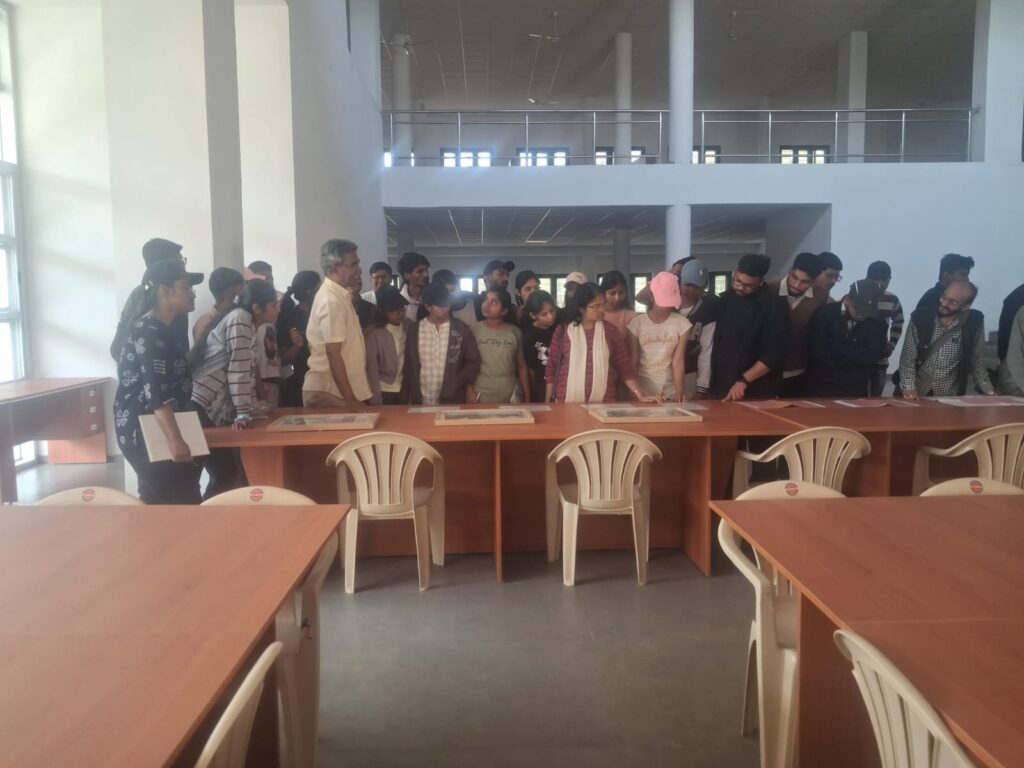
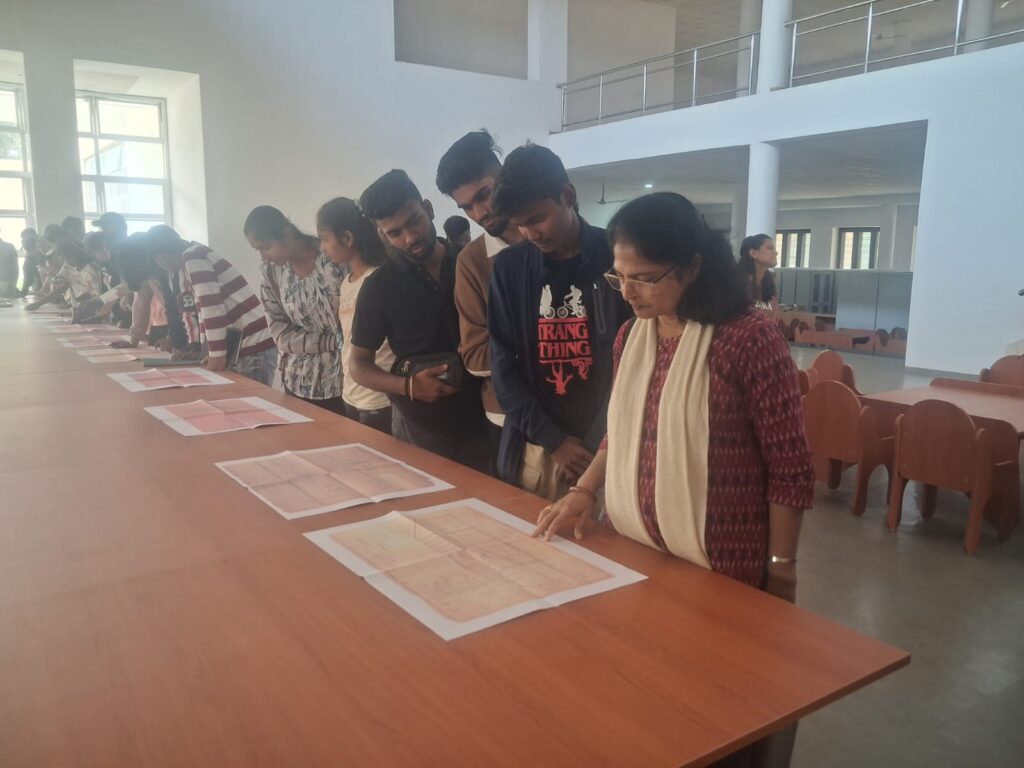
Coinciding with the visit of the faculty and staff of Vidya Pratishthan’s School of Architecture,Baramati to Sevagram Ashram on January 12, 2026, the Library and Research Centre for Gandhian Studies organised an exhibition on the Architecture of Bapu Kuti. This exhibition was based on archival drawings from the 1960s by architects from Wardha and Nagpur.
The display included technical specifications regarding the materials used for the foundation, plinth, superstructure, doors, ventilators, pavement, and roof. The featured drawings consisted of a detailed plan of Bapu Kuti, including the front, west, and north side elevations, a description of items placed within the hut, and a comprehensive site plan.
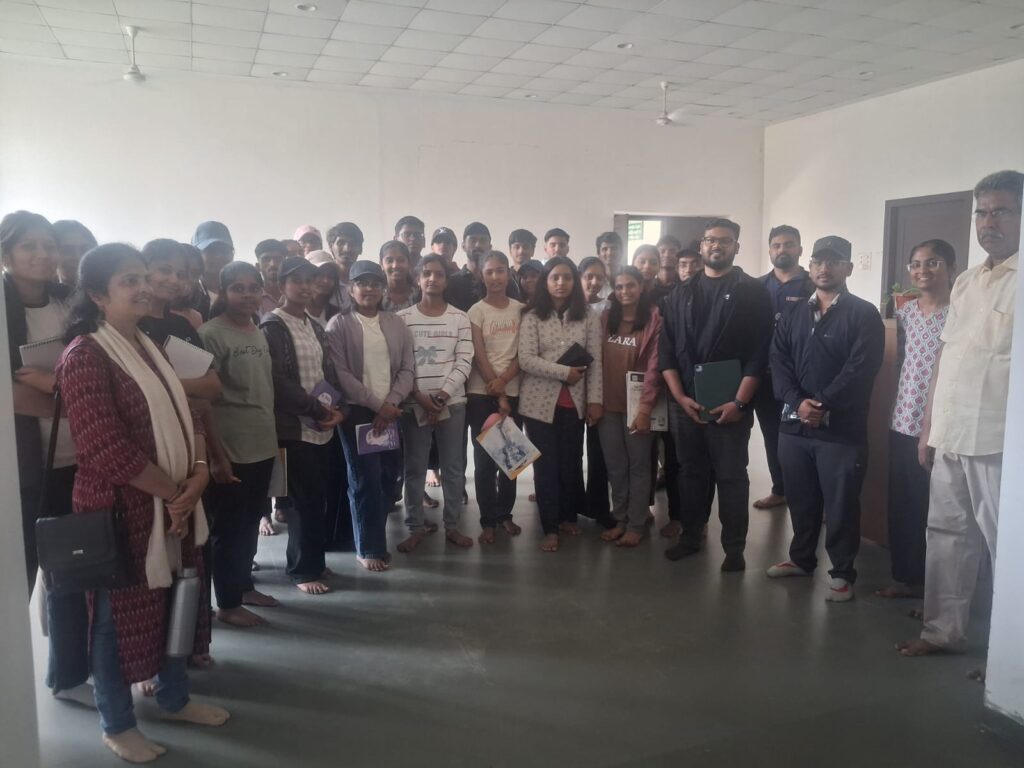
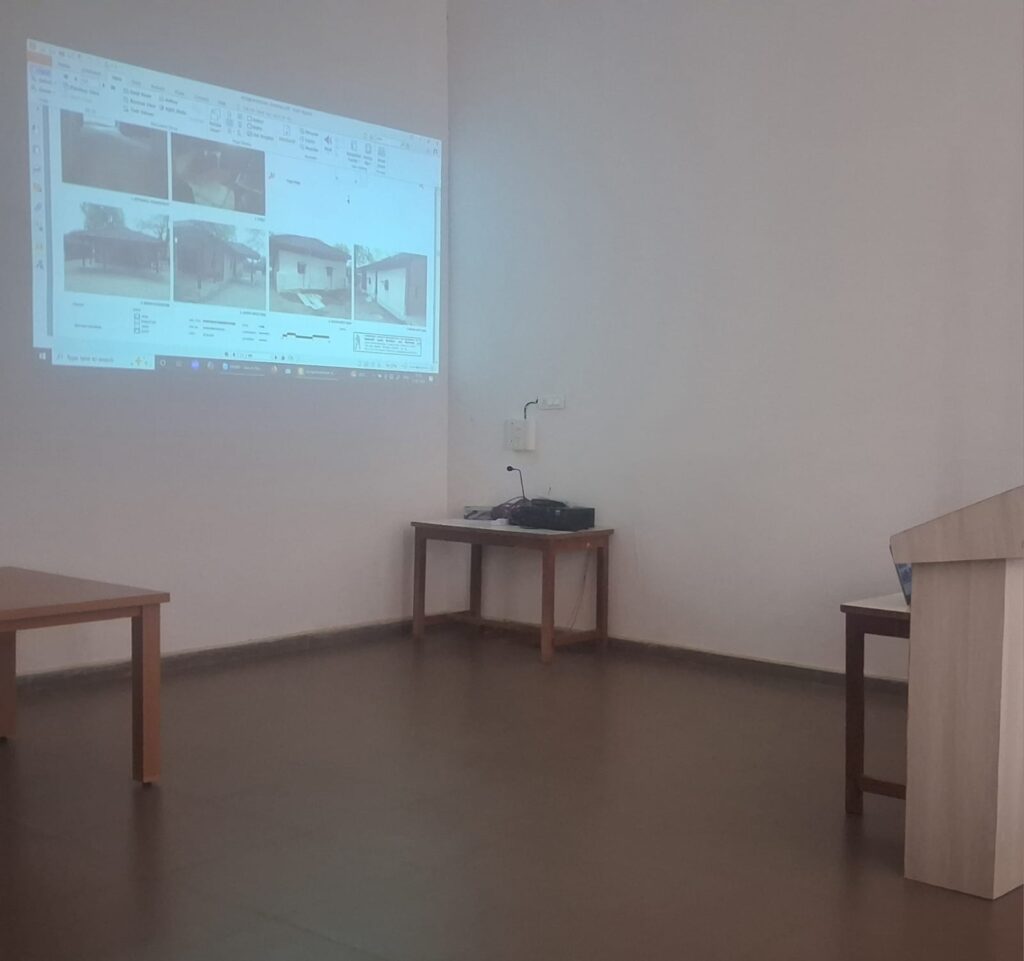
A dedicated session was organised for the group—consisting of 41 participants, including five faculty members—during which drawings of all the huts at Sevagram were screened. An archival video clipping of Sevagram was also presented. Dr. Siby K. Joseph, Director of the Centre, addressed the gathering, and Shri Piyush Shah expressed a vote of thanks on behalf of the group.
About the Author
Dr. Siby K. Joseph is a prominent Gandhi Scholar and Director of
Sri Jamnalal Bajaj Memorial Library and Research Centre for Gandhian Studies,
Sevagram Ashram Pratishthan, Sevagram,
Wardha- 442102, Maharashtra (INDIA)
Email: directorjbmlrc@gmail.com
https://sevagramashram.org.in/index.php/library-and-research-centre/
https://nonvpi.in/