
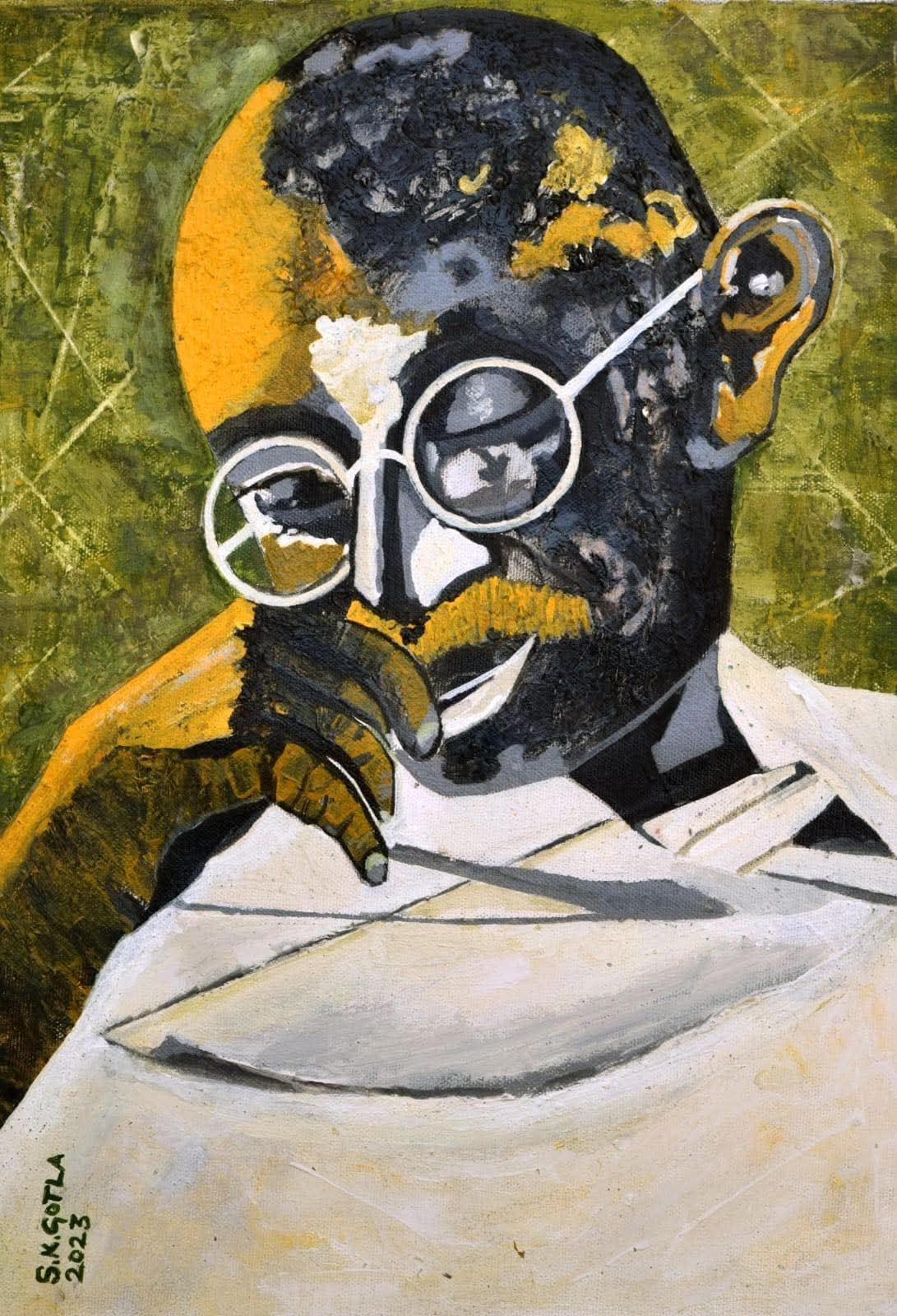
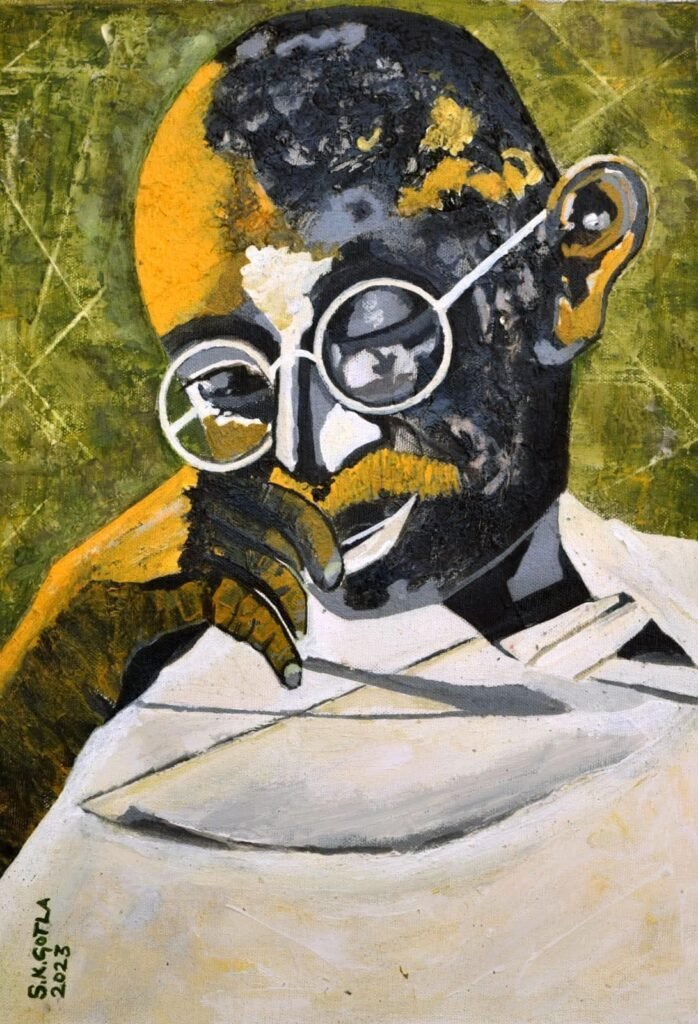
Susheel Kumar Gotla
True freedom provides a conducive atmosphere to lead a peaceful and meaningful life. Every act of a human being should be seen as an opportunity to serve others with love. There is no excuse for wrongdoing while exercising one’s freedom. Rather, it is a privilege that demands righteousness and mutual respect among individuals.
Leading a peaceful life through acts of love is a universal virtue instilled in us by our parents, taught in schools, and reinforced within our communities. Despite this guidance, many of us are trapped in a mental prison devoid of love, trust, honour, and tolerance.
Mahatma Gandhi’s concept of human freedom goes beyond the national liberation of our country. The core idea of freedom in his perception was about making choices that reflect our sense of righteousness towards humanity. In a scenario where social and political freedoms are suppressed by physical force, people are forced into a state of oppression. Gandhi championed the inherent dignity of the human spirit and believed that true freedom cannot coexist with fear, inequality, hatred, or oppression.
He began his spiritual journey by acknowledging and addressing human frailties and weaknesses within himself before striving for the broader goal of human freedom. He emphasized the importance of personal purification in his broader pursuit of collective freedom.
Gandhi’s initiation to fight against the forces of racism began in South Africa when he was literally thrown out of a railway bogie at the Pietermaritzburg Railway Station because of the colour of his skin. It was one of the most creative experiences in his life, which served as a foundation for his later struggles for human dignity, freedom, and social justice. His work, which spanned for more than two decades, made him a champion of the freedom of people of Indian origin in South Africa.
After returning to India in 1915,he spent a year understanding the Indian situation before engaging in socio-political action for the freedom of the country. The first opportunity came in 1917, in Champaran, Bihar, a region which was facing numerous challenges in the agrarian sector due to the forced cultivation of indigo. It provided an opportunity to test the technique of Satyagraha in India for the first time. This long Satyagraha struggle involved legal battles alongside a systematic and scientific study of agrarian issues.The Champaran peasants were grappling with illiteracy, poor sanitation, and health. They needed freedom from all these burdens.
The fight against the British was just one part of the struggle for freedom. The most important part was liberating themselves from ignorance and social evils — a basic precondition to enjoy real freedom. Gandhi and his beloved wife Kasturba worked tirelessly with the villagers to uplift their conditions in different spheres of life, including education, health,and their rights,with due respect to duties.
In his ongoing quest for freedom, Gandhi was not just advocating for political independence; he was addressing deeper aspects of human frailty. He recognized that true freedom is essential for individuals to fulfill their spiritual aspirations and lead lives grounded in righteousness. Gandhi believed that true freedom goes beyond just political rights; it involves breaking barriers of poverty, greed, and the endless pursuit of material wealth. He emphasized the importance of simple living while pursuing higher goals of life. For him, real liberation meant uplifting the most disadvantaged sections of society — that is Antyodaya, which is the first step towards the realisation of his ideal of Sarvodaya. For the attainment of Sarvodaya, he advocated a decentralized economic and political structure which would ensure real economic and political freedom.
Gandhi’s concept of freedom was more than shifting power from one group to another. It demanded a complete reorientation of socio-economic and political structures. In Gandhi’s view, change comes from the ground level , rooted in community efforts and constructive actions rather than mere changes in leadership. Gandhi believed that the path to self-liberation starts from oneself and percolates to the society. This journey is about striving for a life that reflects our highest values and connects us to something greater — what he described as righteous living for enjoying real freedom and bliss.
About the author:
Susheel Kumar Gotla is a well-known artist from Hyderabad . He is fellow of Peace and Nonviolence of the first batch of Fellowship Program of Sevagram Ashram Pratishthan, Wardha Maharashtra.
He is a dedicated art teacher engaged in spreading message of peace and nonviolence among students.