
Introduction
In today’s rapidly changing geopolitical landscape, the conflict involving Iran has once again brought the world to the brink of uncertainty. What may appear as a regional issue has far-reaching consequences for global peace, economic stability, and human lives.
At the center of this crisis stands the United Nations — an institution created with the vision of preventing war and promoting dialogue. But the question remains:
Can global institutions truly stop war in today’s world?
Understanding the Iran Conflict
The Iran conflict is not just a recent development; it is deeply rooted in decades of political tensions, ideological differences, and strategic rivalries.
Key factors include:
- Long-standing tensions between Iran and Western powers
- Regional power struggles in the Middle East
- Nuclear concerns and sanctions
- Military escalations and retaliatory strikes
The recent escalation has intensified fears of a broader regional war, impacting not only governments but also millions of civilians.
Global Impact of the Conflict
This conflict is not limited to borders — its effects are global:
1. Economic Instability
Rising oil prices and disrupted trade routes affect economies worldwide.
2. Humanitarian Crisis
Thousands are displaced, and basic necessities like food, shelter, and healthcare become scarce.
3. Political Polarization
Countries are forced to take sides, increasing global divisions.
Role of the United Nations
The United Nations plays a crucial role in maintaining international peace and security. Its responsibilities in such conflicts include:
1. Diplomatic Mediation
The UN encourages dialogue between conflicting nations and works toward ceasefire agreements.
2. Peacekeeping Efforts
UN peacekeeping forces are deployed in conflict zones to maintain stability and protect civilians.
3. Humanitarian Support
Through agencies, the UN provides food, medical aid, and shelter to affected populations.
4. Upholding International Law
The UN promotes adherence to global laws and investigates violations of human rights.
Limitations of the United Nations
Despite its importance, the UN faces significant challenges:
- Veto Power Politics in the Security Council
- Dependence on member nations for enforcement
- Limited authority over sovereign decisions
- Delays in decision-making during urgent crises
These limitations often raise concerns about its effectiveness in preventing wars.
A Gandhian Perspective on Conflict
From a Gandhian viewpoint, violence is never a solution — it is a cycle that only leads to more suffering.
Mahatma Gandhi believed in:
- Dialogue over destruction
- Truth over power
- Non-violence over retaliation
In the context of the Iran conflict, his philosophy reminds us that sustainable peace cannot be achieved through military strength, but through understanding, empathy, and moral courage.
Why This Discussion Matters Today
For the youth, this is not just a global issue — it is a question about the future of humanity.
- Will the world continue to rely on war?
- Can institutions like the UN evolve to remain relevant?
- What role can young voices play in shaping peace?
Join the Conversation
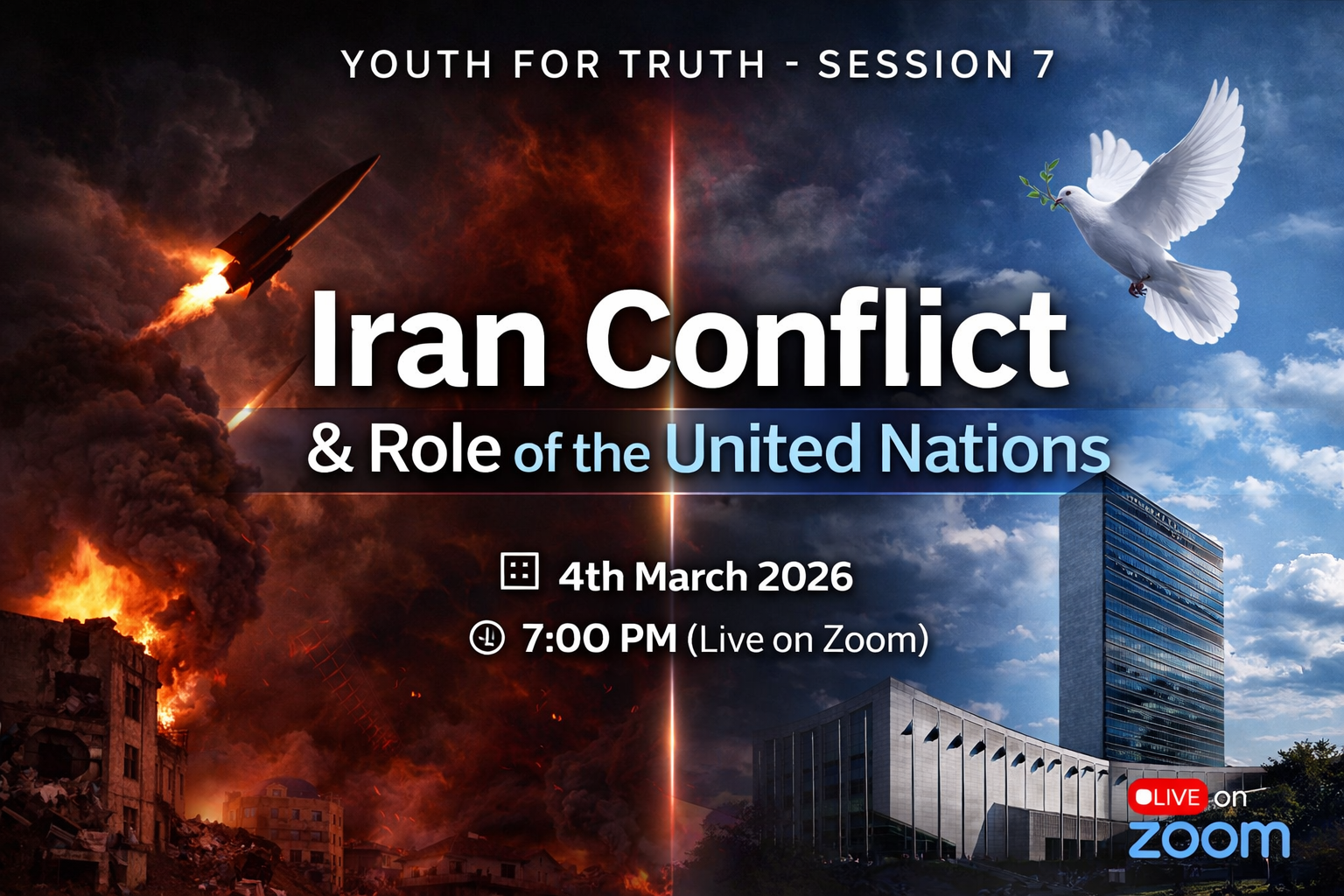
Youth For Truth – invites you to be part of this critical discussion.
🗓️ Date: 4th March 2026
⏰ Time: 7:00 PM
📍 Platform: Zoom
Zoom Link: https://us06web.zoom.us/j/87497886718?pwd=awWFUTyVz8VDeSvwsoLe4O1533Swtr.1
Meeting ID: 874 9788 6718
Passcode: 041335
Let’s come together to question, understand, and explore pathways to peace.
🔍 Conclusion
The Iran conflict is a reminder that peace is fragile, and global institutions alone cannot ensure it. True peace requires collective responsibility — from governments, institutions, and individuals alike.
The United Nations may provide a platform, but it is humanity’s choices that will determine the future.