
By Dr. Siby K. Joseph
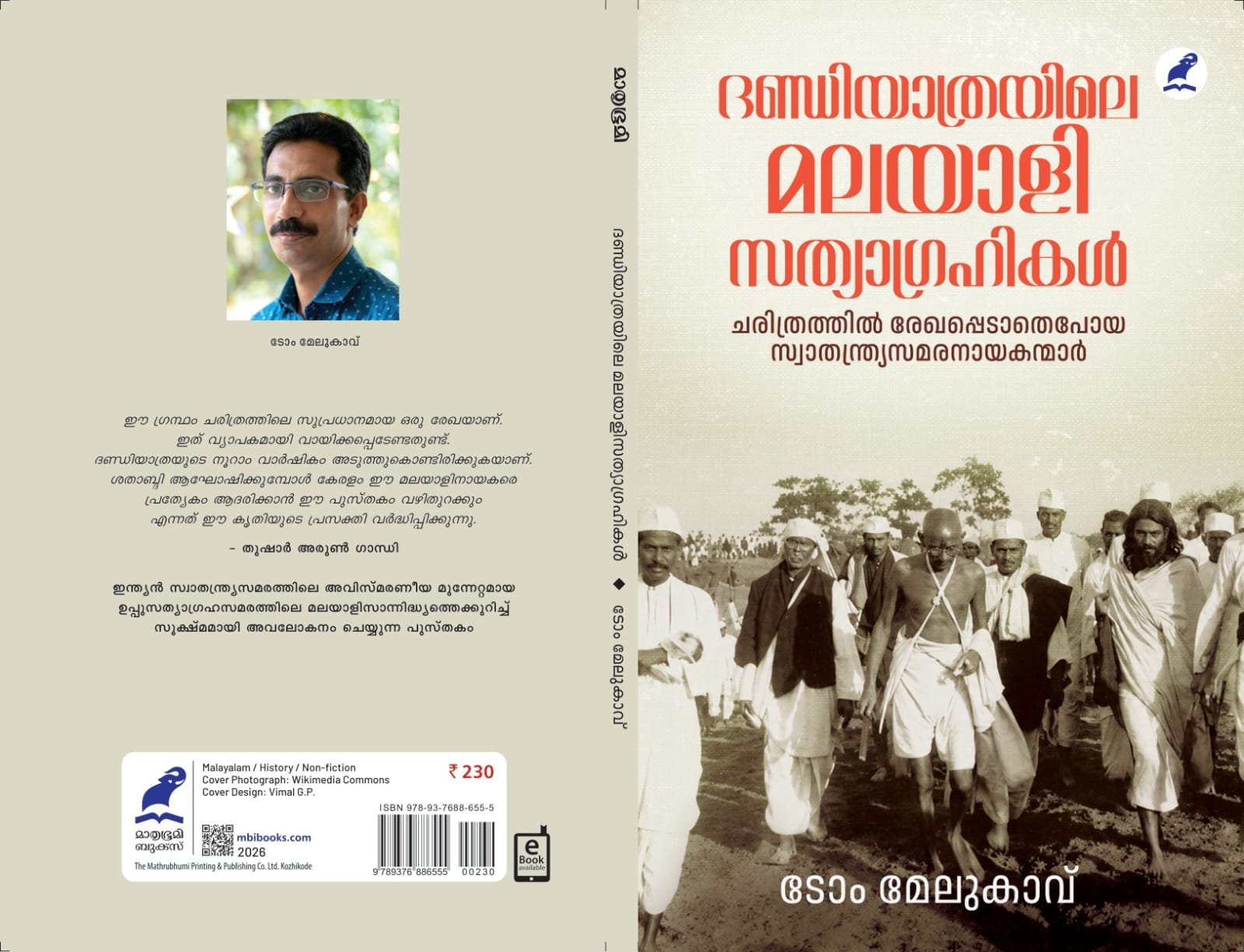
The Dandi March and the Salt Satyagraha of 1930 were defining moments in India’s fight to break free from British colonial rule. By rallying thousands of people to defy the unfair colonial salt tax, this movement turned a basic, everyday ingredient into a powerful symbol of mass resistance. Led by Mahatma Gandhi, a dedicated group of 78 marchers set out from Sabarmati Ashram on a gruelling, 387-kilometer journey to the coast of Dandi. Walking in simple white khadi, this crowd looked like a “white river flowing,” pushing through intense summer heat and painful blisters to challenge British authority. Mainstream history books usually focus on the grand national scale of this massive uprising, which often leaves the personal stories of regional fighters in the shadows. Tom Melukavu’s book, Malayali Satyagrahis in the Dandi March: The Freedom Fighters Unrecorded in History (ദണ്ഡിയാത്രയിലെ മലയാളി സത്യാഗ്രഹികൾ: ചരിത്രത്തിൽ രേഖപ്പെടാതെപോയ സ്വാതന്ത്ര്യ സമര നായകന്മാർ ), brilliantly fills this gap by bringing to light the sacrifices of the five overlooked heroes from Kerala who walked every step of the way alongside Gandhi.
The book opens by diving into the intense socio-political atmosphere of British India that set the stage for the Civil Disobedience Movement. It shows how Gandhi chose salt not just as a kitchen staple, but as a brilliant tool to unite a deeply divided society in protest. Melukavu captures the spirit of the era through patriotic songs, explores how the march drove social reform, describes the brutal British response at the Dharasana salt works, and highlights the brave role women played right on the front lines. He also connects this massive national event to local history, taking the reader to Payyannur, which became the busy heart of the Salt Satyagraha in Kerala.
A major part of the book reads like a detailed personal diary, tracing the 24-day journey day-by-day from Sabarmati Ashram on March 12, 1930, to the shores of Dandi on April 6, 1930. The author maps out every single village, rest stop, and milestone along the path. Alongside this daily timeline, the book brings together Gandhi’s stirring speeches delivered at key stops like Aslali, Anand, Surat, and Dandi, showing how public passion grew along the way. Before breaking the salt law at Dandi, Gandhi shared a message with the world that elevated the march from a local protest into a universal moral battle, famously declaring: “I want world sympathy in this battle of Right against Might.” This moving request showed that the marchers’ willingness to face suffering peacefully was their most powerful weapon against the structural might of an empire.
The heart of the book is about restoring the identities of the five Malayalis who were among those chosen 78 marchers, but whose names are usually just footnotes in school textbooks: Thappan Nair, Titus Thevarthundiyil (Titusji), K. Sankaran Ezhuthachan, N. P. Raghavan Poduval, and C. Krishnan Nair. Melukavu shares intimate biographical sketches of these men, exploring what drove them, how they made their way to Sabarmati Ashram, and what it was truly like to walk right beside Gandhi. The book closes with a narrative of all 80 marchers who took part in the historic event.
Ultimately, the book offers a crucial regional lens on a massive chapter of national history, shifting the focus to the deeply personal sacrifices of Kerala’s revolutionaries and making it a vital piece of subaltern literature. Underscoring the historical value of this work, Tushar Arun Gandhi—Mahatma Gandhi’s great-grandson—noted: “This book is an important document in history. It needs to be widely read. The centenary of the Dandi March is approaching. When we celebrate the centenary, this book will pave the way for Kerala to specially honour these Malayali leaders. This increases the relevance of this work.” Published by Mathrubhumi Books in Kozhikode, this 140-page historical volume is priced at ₹230, and you can order a copy by calling +91 7736806280.
About the Author: Tom Melukavu, a native of Kottayam and a History teacher at St. Mary’s Higher Secondary School (Arakulam, Idukki), holds multiple postgraduate degrees across History, Gandhian Studies, Social Work, and English. This newly published book, released in August 2026, reflects his deep archival commitment to unearthing forgotten regional narratives.
About the Reviewer: Dr. Siby K. Joseph is an eminent academic and Gandhi scholar currently serving as the Director of the Sri Jamnalal Bajaj Memorial Library and Research Centre for Gandhian Studies at the historic Sevagram Ashram Pratishthan in Wardha, Maharashtra.