
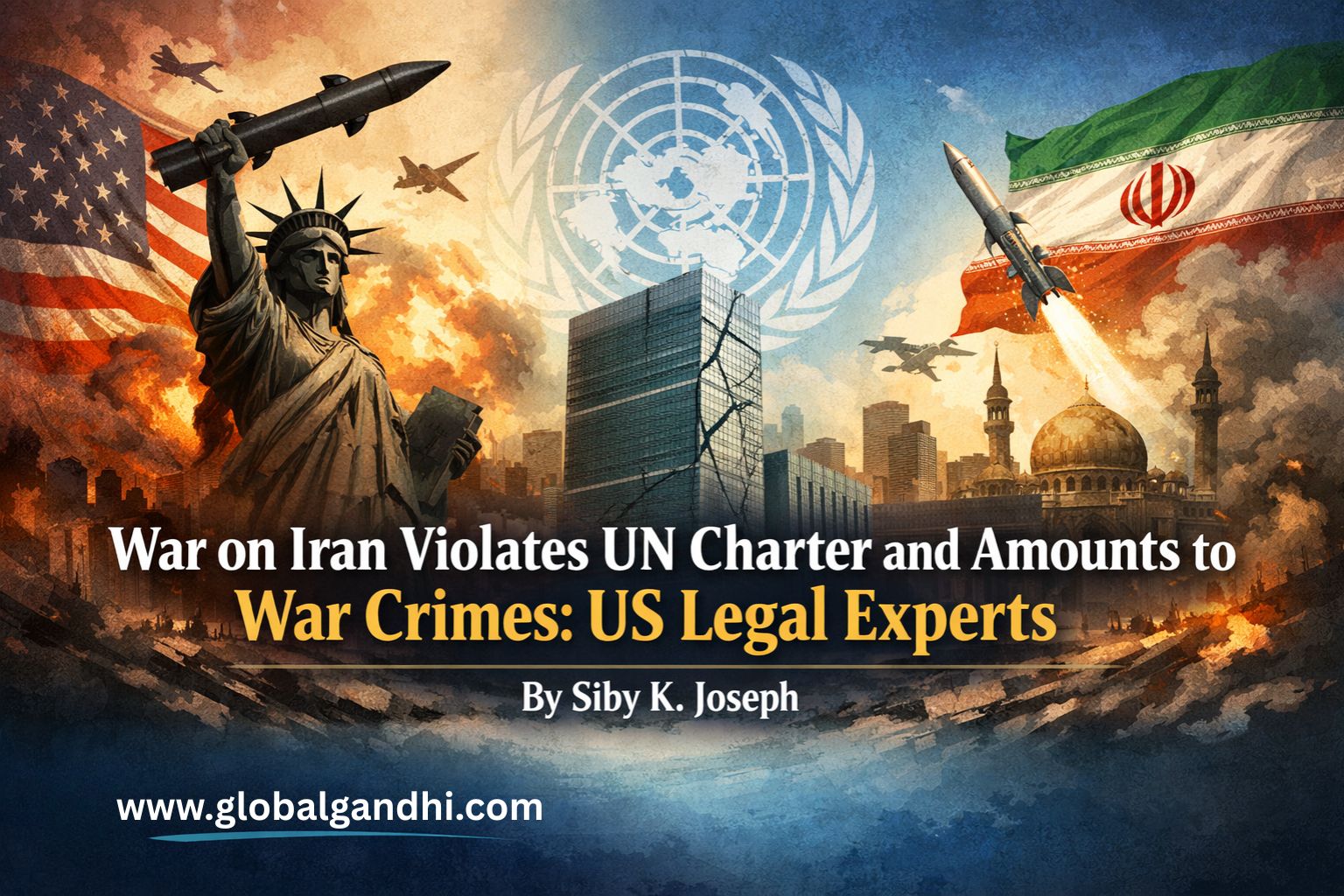
As the war enters its second month, over 100 U.S.-based international law experts have signed an open letter outlining profound concerns regarding U.S. and Israeli military actions against Iran. The letter, published in Just Security on April 2, 2026, characterizes the conflict as a “clear violation of the United Nations Charter” and warns that current U.S. conduct may amount to war crimes.
In response to the open letter, the White House stated that the President was making the entire region safer, dismissing the signatories as “so-called experts.” However, the group represents an unparalleled repository of knowledge in international human rights, refugee law, and global migration. Many members hold prestigious chairs at institutions like Stanford, Yale, NYU, and Boston University. The group includes former United Nations Special Rapporteurs such as E. Tendayi Achiume and Philip Alston, who have led global investigations into racism and extreme poverty, as well as leading clinical professors and directors like Susan Akram and Sandra L. Babcock, specialists in international litigation and the rights of displaced persons. Supported by institutional leaders like Baher Azmy of the Center for Constitutional Rights and Aslı Ü. Bâli of Yale Law, these scholars combine rigorous academic research with decades of practical experience in holding states accountable to the UN Charter.
In the open letter, the legal experts detail several critical concerns regarding the U.S. government’s conduct and its profound impact on the international legal system. The experts assert that the initial military campaign was a “clear violation of the United Nations Charter.” They further argue that subsequent actions by U.S. forces raise “serious concerns about violations of international human rights law and international humanitarian law, including potential war crimes.”The letter highlights a troubling shift in government language, specifically citing official statements that describe established rules of engagement as “stupid” and others that prioritize “lethality over legality.” The signatories warn that such rhetoric is “harming the international legal order” and undermining the very system of law they have devoted their lives to promoting.The authors emphasize the necessity for the “equal application of international law to all,” pointedly including nations that position themselves as “global leaders.” They argue that no state should be exempt from the legal frameworks that govern global conduct. While the letter focuses on U.S. actions, the experts express grave concern regarding “the risk of atrocities across the region.” This includes a specific critique of the Iranian government’s “violent crackdowns on dissent” and its own “unlawful strikes on civilian infrastructure,” highlighting a cycle of violence that threatens regional stability.
The experts further categorise their concerns into four technical pillars:
1.Jus ad Bellum (The Decision to Go to War): The strikes launched on February 28, 2026, violated the UN Charter’s prohibition on the use of force. Force is only permitted in self-defence against an actual or imminent armed attack or where authorized by the UN Security Council—neither of which occurred.
2.Jus in Bello (The Conduct of Hostilities): The specific methods used in the conflict raise immediate alarms regarding international humanitarian law and the protection of non-combatants.
3.Rhetoric and Threats: Verbal threats from senior officials portend further abuses and weaken the moral standing of international law.
4.Decimation of Safeguards: The experts point to U.S. Secretary of Defense Pete Hegseth’s “gloves off” approach as having decimated the internal structures meant to mitigate civilian harm.
The intervention of these legal experts brings into the limelight the fact that the current UN system is failing to restrain powerful states or protect global peace. It is now clear that there is an urgent need for a fundamental restructuring of the United Nations and its Security Council to ensure total compliance with international law and the equal protection of all nations.
About the Author
Dr. Siby K. Joseph is a distinguished academician and specialist in Gandhian Thought and Peace and Conflict Studies with over two decades of experience in research and activism.